
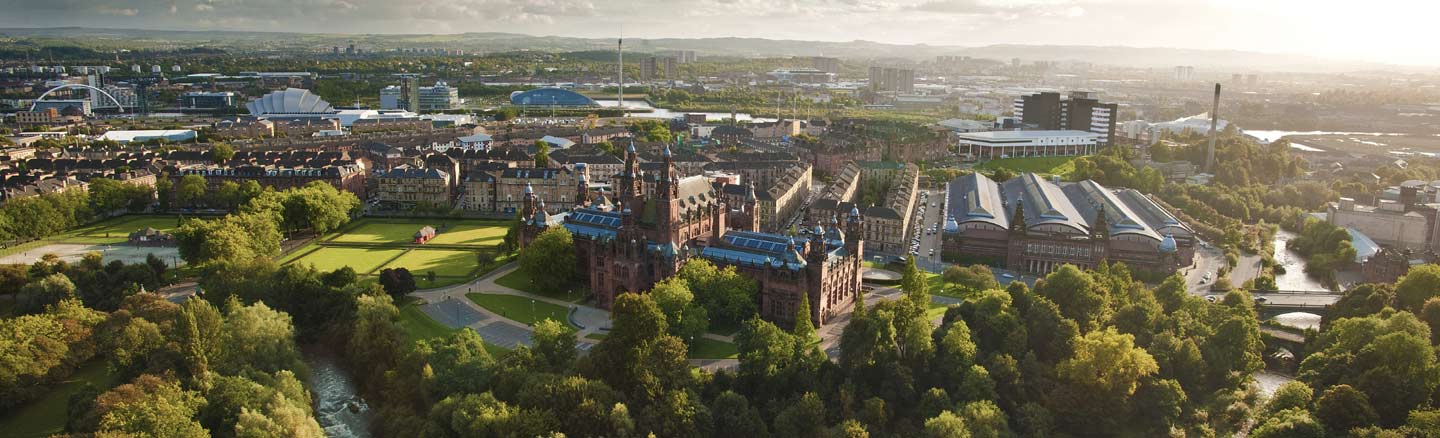
Glasgow, Scotland’s largest city, is a place of contrasts—where medieval roots meet industrial might, grand Victorian architecture towers over ancient sites, and modern creativity thrives beside timeworn traditions.
How old is Glasgow? In 2025, the city celebrates Glasgow 850, marking 850 years since its official founding. It’s the perfect time to reflect on the captivating story of how Glasgow grew from a humble riverside settlement into one of the UK’s most influential cities.
Sacred Origins: Early Glasgow and St Mungo
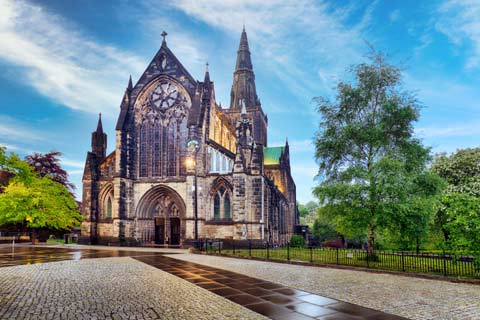
Long before Glasgow’s name echoed across the globe, it began as a small religious community along the banks of the River Clyde. St Mungo (also known as Kentigern), a 6th-century Christian missionary and Glasgow’s patron saint, sits at the heart of its foundation.
According to legend, St Mungo was invited by the King of Strathclyde to establish a church near the Molendinar Burn - a tributary of the River Clyde. It was there, around 540 AD, that he built a simple religious cell and began preaching Christianity to the people of Strathclyde.
The settlement that grew around his church became known as “Glasgu”- a Brythonic name meaning “dear green place.”
Though small and spiritual in its early days, this monastic centre sowed the seeds for Glasgow’s future significance.
The Medieval Burgh: Glasgow’s First Steps as a City
The year 1175 was a real turning point for Glasgow. That’s when King William the Lion granted a royal charter, officially making Glasgow a burgh. With it came the right to hold markets and run its own affairs — a huge step in the city’s growth. It’s this moment that lies at the heart of the Glasgow 850 celebrations in 2025.
In medieval times, life in the city centred on Glasgow Cathedral, completed in the 13th century and still one of Scotland’s finest Gothic buildings. Pilgrims travelled from far and wide to visit St Mungo’s shrine, helping Glasgow thrive as both a religious and trading centre.
Learning soon followed. In 1451, the University of Glasgow was founded by Pope Nicholas V at the request of Bishop William Turnbull. It quickly turned the city into a respected centre of scholarship, attracting thinkers from across Europe.
Trade, Tobacco, and the Rise of Merchant Power
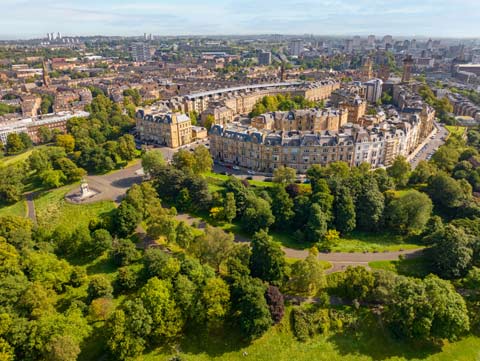
The 17th and 18th centuries brought radical transformation. Glasgow’s location on the River Clyde proved pivotal, as improved navigation allowed ships to sail further inland. This opened the city to transatlantic trade, especially with the Americas and the Caribbean.
By the 1700s, Glasgow was thriving as a mercantile powerhouse. The so-called “Tobacco Lords”- wealthy merchants dealing in tobacco, sugar, and cotton -accumulated vast fortunes and built opulent mansions that still dot the city today, particularly around Merchant City.
Though their wealth drove urban expansion, it’s important to acknowledge that much of it was rooted in slavery and colonial exploitation - a fact modern Glasgow increasingly confronts with honesty and public dialogue.
The Industrial Age: Glasgow’s Transformation
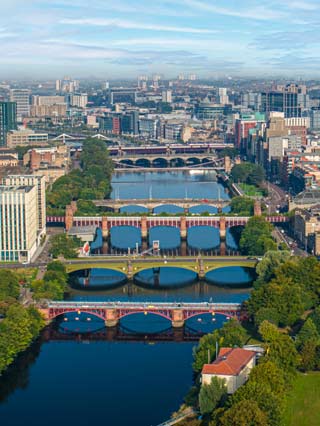
The 19th century saw Glasgow reach the zenith of its industrial power. Known as the “Second City of the Empire,” Glasgow became a global centre of shipbuilding, engineering, steel, textiles, and finance. The River Clyde was lined with massive shipyards and factories, and Glasgow-built vessels sailed the globe under the Union Jack.
The city’s population surged, from around 77,000 in 1801 to more than 750,000 by the end of the century. People arrived from across Scotland, Ireland and further afield in search of work. Tenement housing spread quickly, and whole neighbourhoods seemed to appear almost overnight.
This sudden growth brought both progress and pressure. Glasgow became a centre of innovation in science, medicine and engineering, producing brilliant minds such asLord Kelvin and James Watt. At the same time, overcrowding, disease and poor living conditions took a heavy toll on working-class communities.
In response, philanthropic industrialists, churches and early social reformers stepped in. Parks, public libraries, and improved housing schemes were created to tackle inequality and make the rapidly growing city a healthier place to live.
Victorian Grandeur and Cultural Flourish
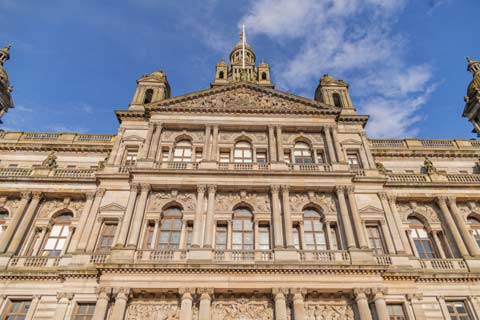
Victorian Glasgow was as much about cultural ambition as it was about industrial might. Grand civic buildings, theatres, galleries, and universities showcased the city’s wealth and intellectual pride.
George Square, the City Chambers, and the Kelvingrove Art Gallery and Museum - opened in 1901 - are just a few of the architectural gems from this era.
The Glasgow School of Art, led by the innovative architect and designer Charles Rennie Mackintosh, helped shape the city’s unique artistic identity.
Music halls, football clubs, and trade unions also grew rapidly, reflecting the city’s diverse working population.
War, Decline, and Rebirth
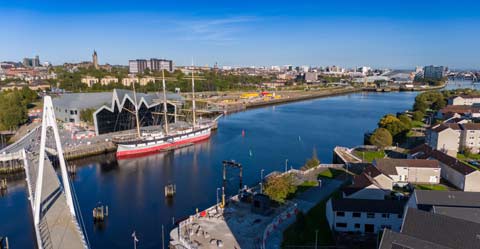
The 20th century ushered in new challenges. Both World Wars demanded immense industrial output from Glasgow’s shipyards and heavy industries, but after the war, demand steadily reduced as overseas competition increased. Glasgow’s manufacturing sector collapsed, leading to widespread unemployment.
Entire communities suffered economic and social deprivation, particularly in the east and along the river. In the 1960s and 70s, large-scale housing schemes were created to rehouse families in places like Easterhouse, Drumchapel, and Castlemilk, though many were later criticised for their design and isolation.
In the late 20th century, buildings blackened by soot were cleaned to reveal the red and gold sandstone beneath. Empty warehouses and industrial buildings were converted into flats.
A major turning point in the city’s fortunes came in 1990 when Glasgow was named the European City of Culture. The award created investment in the arts, architecture, and urban renewal. The city repositioned itself as a centre for music, design, and innovation.
New venues such as the SEC Armadillo, Riverside Museum, and The Burrell Collection enhanced the city's cultural landscape, while the Clyde Waterfront Regeneration breathed new life into former industrial areas.
A City of Today: Innovation and Diversity
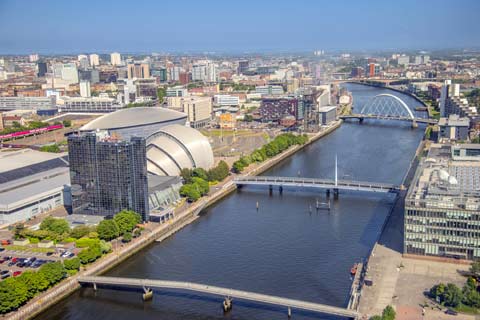
Modern Glasgow is a vibrant, diverse city with world-class universities, hospitals, sports venues, and an award-winning food and music scene. It continues to attract people from all over the world, creating a multicultural energy that defines its 21st-century identity.
Sport continues to shape Glasgow’s identity too. Football giants Celtic and Rangers boast passionate supporters worldwide. The success of the 2014 Commonwealth Games sparked renewed civic pride and resulted in major investment in the city’s infrastructure.
The Games will return again in 2026, helping to reinforce Glasgow as a host city for international events.
Glasgow 850: A Celebration of Heritage and Hope
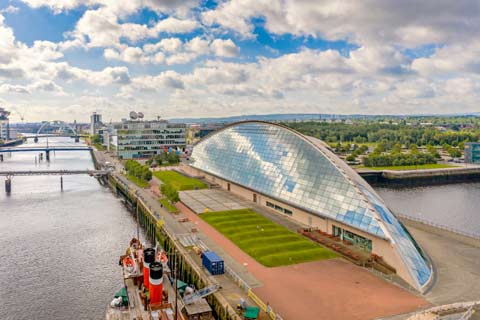
The Glasgow 850 Celebrations showcase the city’s history, from Medieval Glasgow to its industrial heyday and modern reinvention.
Events, exhibitions, walking tours, and public art installations all highlight the city’s deep and varied roots - highlighting both triumphs and traumas.
During these celebrations, the focus on the River Clyde reminds Glaswegians and visitors alike that Glasgow’s lifeblood - its river - has always been central to its story.
From the religious settlements beside the Molendinar Burn to the steamships that dominated global trade, the Clyde remains a powerful symbol of the city’s resilience and transformation.
Explore Glasgow with Scottish Tours
Discover Glasgow’s many attractions with Scottish Tours.
Take your seat on the Glasgow City Tour, where 21 convenient stops allow you to hop-off to visit sprawling parks, inspiring museums and fascinating galleries. Discover the city’s history as you travel along the banks of the River Clyde and through bustling neighbourhoods.
Using Glasgow as a base, you can explore further afield on a day tour to Loch Ness, Stirling Castle or even take a trip on the Jacobite Steam Train.
Browse our tours and book today.
| TOUR TIP: Glasgow City Tour Hop-on, Hop-off Tour |
Picture credits: Visit Glasgow and VisitScotland