
The quality of Scotland’s larder means you can enjoy the very best ingredients that the sea and land can provide. With dedicated chefs and cooks using local suppliers, it’s possible to discover the most exquisite cuisine in pubs, restaurants and coffee shops throughout the country.
Scotland’s Natural Larder
Foodies will be spoilt for choice, with 17 restaurants in Scotland awarded Michelin stars, including two with 2 stars.
Away from fine dining, you’ll find eateries promoting the use of local produce, cooked with flair and imagination.
Everything from small tearooms and B&Bs to fine city restaurants and hotels, all serving the best of Scottish ingredients.
Food and Drink in Edinburgh
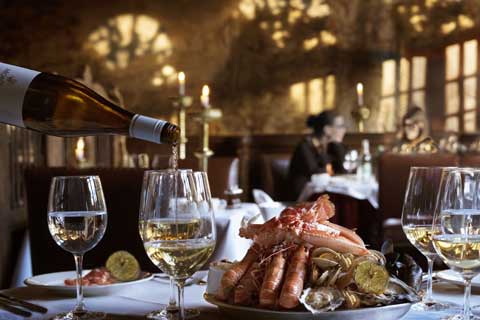
Edinburgh’s restaurant scene is a brilliant mix of heritage, creativity and sheer culinary confidence, and you feel it everywhere, from its Michelin-starred dining rooms to its tiny, character-packed takeaways and street food outlets.
Restaurants in the city champion Scotland’s natural larder served with real flair, whether you’re tasting modern Scottish plates at The Kitchin, elegant seasonal cooking at Restaurant Martin Wishart, or relaxed, ingredient‑led dishes at The Scran & Scallie.
Located in the shadow of Edinburgh Castle, The Witchery has offered fine dining in atmospheric surroundings for over five decades.
For something more contemporary, Noto and Heron bring global influences into the Scottish fold, while Lyla offers impeccably fresh seafood.
Food and drink in Glasgow
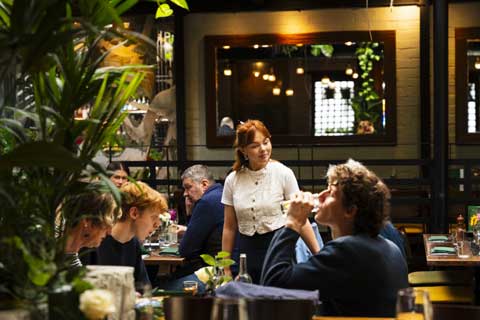
Glasgow’s restaurant scene is bold and full of personality. It’s worth checking out local neighbourhoods such as trendy Finnieston, the West End, or Shawlands, which all boast independently run restaurants and brunch joints.
Among the top-end restaurants, Cail Bruich and Unalome by Graeme Cheevers deliver modern Scottish cooking that genuinely earns its Michelin stars. Ox and Finch specialises in small‑plate dining using international flavours, while The Buttery is a Glasgow institution, founded in 1870, that's been offering fine dining for generations.
And if you want something more relaxed but still memorable,The Ubiquitous Chip and Fanny Trollopes are the kind of places you might want to seek out.
Scottish Cuisine
French cooking has long been an essential part of Scottish cuisine due to the country’s historical alliances with France. Scotland is also renowned for seafood, Angus beef and lamb. Poached salmon caught fresh nearby, and aged venison from the deer-studded Highlands are particular favourites.
Vegetarian and vegan food is widely available, particularly in the cities, so eating out will not be too much of a challenge.
You’ll find that many restaurants label their veggie and vegan dishes on the menu and, if not, the staff will be happy to offer advice.
Great Value Eating
If you are travelling on a budget, ask to see the pre-theatre menu if you are dining in the early evening. These menus usually comprise house specials and offer excellent value. Don’t worry; you don’t need to go to the theatre afterwards unless you want to!
Online, you can find fantastic deals at websites like Itison, where restaurants will offer enhancements like free drinks or desserts if you book to eat at quieter times.
Pubs, Bistros and Gastro‑Pubs
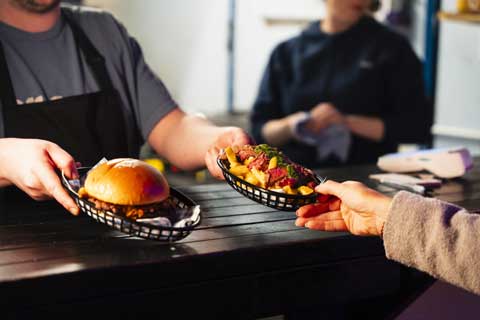
Besides restaurants, look to pubs and bistros for informal meals, especially at lunchtime.
The growing number of gastro-pubs offers high-quality food in a relaxed, informal setting.
In most towns, you’ll find an array of World cuisines with Indian, Chinese, Thai, Italian and Mexican being the most popular.
You’ll also find all your favourite fast food joints, but for an authentic ‘takeaway’ meal, nothing can compare to traditional fish and chips, eaten al fresco from the wrapper.
Sharpen your Culinary Skills
If you’d like to hone your culinary skills, then why not include a lesson at one of Scotland’s cooking schools in your travel plans?
One-day or weekend immersion classes are available covering specific menus, such as seafood or modern Scottish cuisine. The best part is that after time slaving over a hot stove, you can relax and enjoy tasting your dishes in the company of your fellow pupils.
Iconic Scottish Dishes
Haggis
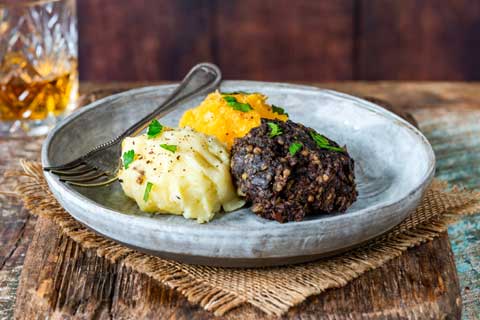
The country’s national dish has a reputation that usually precedes it; even among first-time visitors, many are predisposed to dislike it because of its description.
More adventurous eaters will find it quite tasty; anyone who likes sausage won’t find haggis that different.
It’s a large sausage or pudding made from oatmeal and offal mixed with suet, onion and spices.
Traditionally, it was cooked in a sheep’s stomach, but today it is usually prepared in a modern synthetic skin and often served with ‘neeps and tatties’ (mashed turnips and potatoes). There is also a vegetarian version.
Haggis takes centre stage at a Burns Supper, carried in with ceremony before being addressed in Robert Burns’s famous Address to a Haggis.
Breakfast
Besides fresh fruit, juices, cereals, rolls and jams, Scottish breakfasts often feature porridge (a hot oatmeal dish), smoked fish such as kippers (herring) or Arbroath Smokies (haddock).
A full cooked Scottish breakfast often features haggis or fruit pudding in addition to the usual bacon, sausages and eggs. A fried “tattie scone” (potato scone) is also a popular feature.
Fish Supper or ‘fish and chips’
The fish is usually haddock, which is battered or served in breadcrumbs. At the best establishments, you’ll have a short wait as your order is freshly cooked and then served with thick-cut French fries (chips). If you are dining in a coastal community, you’ll find this rustic experience to be a culinary delight!
Discover more about the excellent seafood available in Scotland with our Guide to the best seafood in Scotland blog.
Scotch Broth
A hearty soup with barley and vegetables
Cullen Skink
This tasty soup is made with smoked haddock, potatoes and onions and hails from the Moray coast.
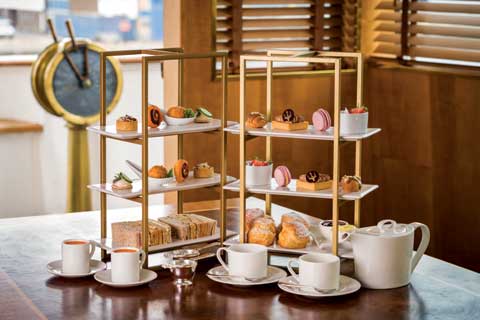
Baked Goods and Afternoon Tea
Scones and shortbread are the most well-known, but gingerbread, fruit bread and cakes of all varieties are popular too.
These baked goods, along with jams and local honey, are essential to a real afternoon tea.
High Tea
This is a late-afternoon/early-evening meal that includes a hot dish, such as fish and chips, with bread and butter. Traditionally, it is served with an array of baked goods and jams, and tea or coffee.
Tablet
If you have a sweet tooth, you’ll find this confection to be delicious. It is often served as an sweet accompaniment with tea or coffee after a meal.
Cheese
The popularity of Scottish cheeses has never been higher, thanks to the efforts of cheesemongers like I J Mellis or George Mewes. In addition to their own shops, they supply delis and restaurants nationwide.
Look out for delicious artisan cheeses such as Isle of Mull cheddar, Caboc or Ayrshire Dunlop - best served with a traditional oatcake.
Scotland's National Drinks
Whisky
The word ‘whisky’ comes from the Gaelic’ uisge beatha’, which means ‘the water of life’. It’s Scotland’s National drink, and there are three types: Malt Whisky, Grain Whisky, and Blended Whisky, which is a delicate blend of malts from various distilleries with grain whisky.
Popular examples of blended whiskies include Famous Grouse, Bells and Johnnie Walker.

Scotland has over 100 active distilleries, with the main production areas being Speyside, the Scottish Islands (including Islay and Jura), the Highlands and the Lowlands.
Malt whisky is made from only three ingredients: malted barley, water and yeast.
Some experts say there is a fourth - time, as the spirit matures for at least 3 years (most whiskies age for much longer).
Many tours have the opportunity to visit a distillery to discover the five stages of the production process, then enjoy a tutored tasting of the end product.
For connoisseurs, specialist tours are available that will let you immerse yourself in the history and traditions of whisky-making.
Gin
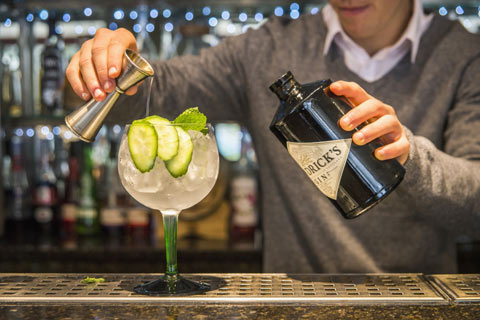
It is said that over 180 different gins are produced in Scotland. Although whisky is considered our national drink, we can trace our love of gin back to the 1700s.
Some of the best-known brands are produced in Scotland, including Hendricks, Gordon’s and Tanqueray.
There is an increasing number of small-batch producers creating fruit, wild plant and herb-flavoured gins.
As well as being produced in the popular whisky-making areas of Speyside and Islay, gin is also distilled on the islands of Harris, Tiree and Orkney, amongst others.
For something a bit different, seek out The House of Elrick, whose gin uses freshwater sourced from Loch Ness!
Craft Beers
Scotland has a long tradition of brewing beer, with Edinburgh, Glasgow, and Alloa as traditional centres of production. The interest in locally produced craft beer has meant an explosion of breweries operating in Scotland.
With more than 100, you are never too far away from quenching your thirst with a local brew. Many breweries operate tours so you can see the production process, speak to the brewers and then sample the end product!
Irn Bru
The orange-coloured soft drink, Irn Bru, is often advertised as ‘Scotland's other national drink.' It has since become popular in other parts of the UK and is definitely worth trying.