
Go on a whirlwind tour of all that Scotland has to offer with our handy A-to-Z guide. Grab your favourite beverage and settle in as you learn all about Scottish locations, history, battles and terminology too.
A - Alloway
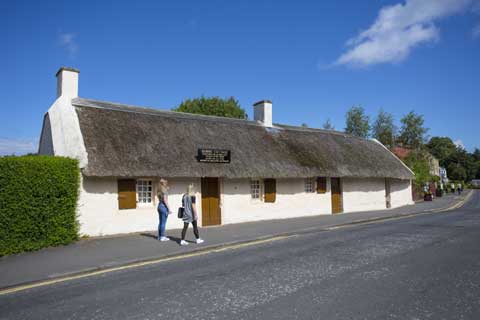
This is the perfect example of a ‘chocolate box” village that’s steeped in history and will forever be synonymous with Scotland’s National Poet, Robert Burns.
Burns was born in a cottage now part of the main street of Alloway and took inspiration from his surrounding environment for his famous poem ‘Tam O’Shanter’.
You can even see the Brig O’Doon yourself when you visit Alloway, a truly Scottish experience.
B - Bannockburn
This famous event took place in 1314. In a battle between the forces of Scotland and England, the Scottish army, under the command of Robert the Bruce, was victorious over the English troops of King Edward II. As a result, Scotland was eventually granted its independence.
A trip to Bannockburn can bring this monumental event to life, especially if you visit the Bannockburn Visitor Centre, which tells the story of the conflict and its lead-up.
C - Clans
Quintessentially Scottish, meaning family or children in Gaelic, a clan is a community of families and individuals who were loyal to the Clan Chief.
A clan is often associated with different areas of Scotland, and some surnames can also represent a particular clan.
Being part of a clan can feel like being part of a large group with a shared interest. Famous Scottish clans include the Campbells, MacLeods and MacDonalds.
D - Dreich
This famous Scottish word, which originated in 1420, originally meant something that was slow or tedious. Fast forward a few (hundred) years, and it is now an extremely popular Scottish word meaning dreary or unpleasant weather.
Check out our 10 Braw Words and Meanings blog for more unusual Scottish words.
E - Edinburgh
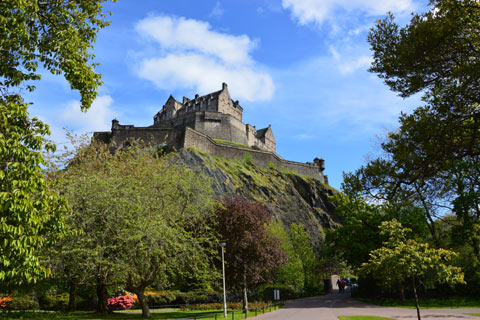
This grand city is the capital of Scotland and, for many, has the right blend of old and new.
From the Royal Mile, the Palace of Holyroodhouse and iconic Edinburgh Castle to the modern shopping areas with cafes and bars, there is something for everyone on a visit to Edinburgh.
There’s even Arthur’s Seat for the adventurous amongst us, and not forgetting the Royal Yacht Britannia, where you can pretend to sail the oceans like a King or Queen.
F - Forth Bridge
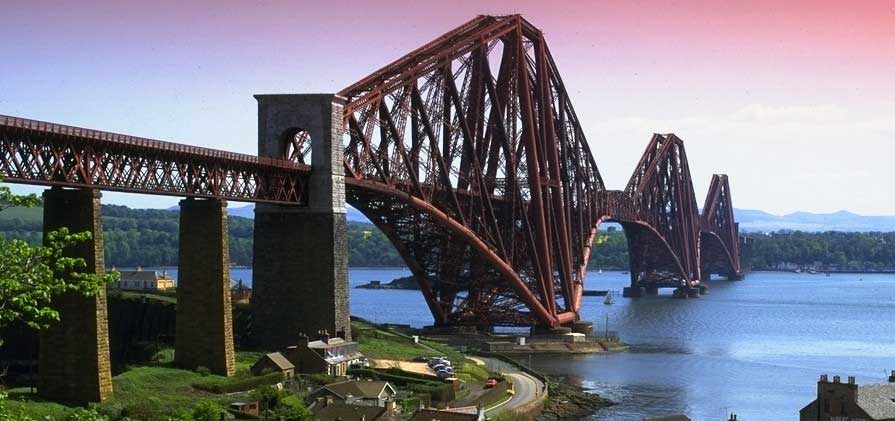
This iconic crossing of the Forth estuary is a UNESCO World Heritage site. A magnificent red steel structure that still takes the title of the world’s longest cantilever bridge, even though it opened in 1890.
We’ll let the numbers do the talking here: it’s 2467m long, and the highest point is a whopping 137m above the foundations. Created using 53,000 tonnes of steel, 6.5 million rivets and 240,000 litres of paint, the bridge is crossed by 200 trains every day and 3 million passengers a year.
G - Glen Coe
This awesome valley is a haven for hillwalking and mountaineering. It’s also another Scottish location that’s oozing with history, especially when it comes to two famous clans - the Campbells and MacDonalds.
The massacre of Glen Coe is infamous for the way it happened when troops of the Campbell clan killed 38 of the MacDonalds after staying peacefully with them as their guests beforehand.
Glen Coe is famous for its natural beauty and has featured in several movies, including Harry Potter and James Bond.
H - Highland Cow
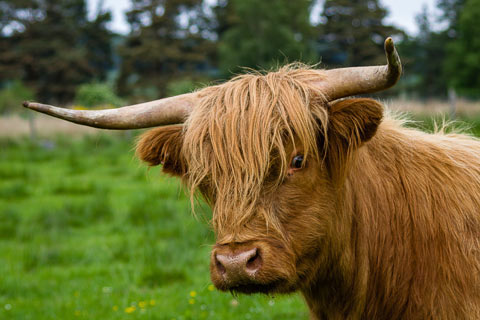
The Highland Cow, or ‘Hairy Coos’ as they’re affectionately known, is one of our favourite Scottish inhabitants. Native to Scotland, the Hairy Coo is distinctive for its hairy coat and large horns.
They can be found in lots of different colours, including red, black and even silver.
Probably the most prevalent colour is a ginger/toffee shade. It’s said that when Queen Victoria visited the Highlands, she stated that she preferred that colour, so owners bred cattle that way, just to please her!
Hairy Coos are also a very old breed, dating back to the Neolithic Era. In fact, they’re the oldest cattle breed (registered) in the world.
I - Inverness
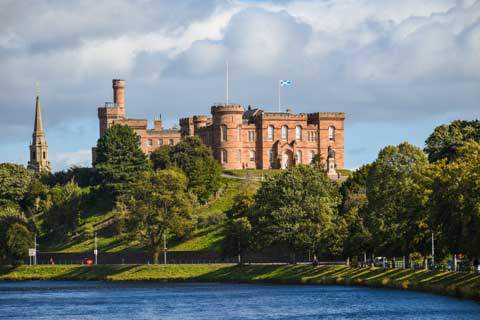
Known as the “Capital of the Highlands”, Inverness boasts a Victorian Market, St Andrew’s Cathedral, Inverness Castle and of course, the River Ness.
Due to the location of this city, Inverness can also act as a gateway to lots of other iconic sites, including the Culloden Battlefield - where Bonnie Prince Charlie’s Jacobite Uprising came to a bloody end in 1746 - and the seaside town of Nairn, a favourite holiday spot of Charlie Chaplin.
Of course, we couldn’t talk about Inverness without mentioning Loch Ness and the world-renowned Loch Ness monster…more on this coming later!
J - John O’Groats
The most northerly village in the United Kingdom is termed the ‘end of the road’. There’s spectacular scenery, wondrous wildlife, and a charming coastal village to explore.
You will also get the chance to take a photograph with that famous signpost and experience the Ness and Stacks of Duncansby too.
If you are lucky, on a clear day, you might be able to spot Orkney or some local wildlife.
K - Kilchurn Castle
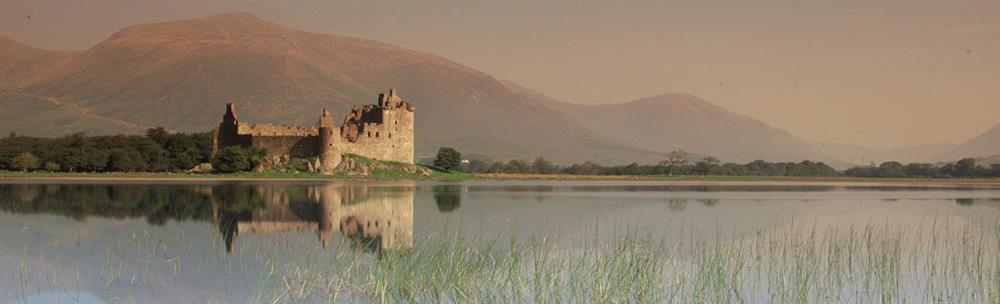
Overlooking Loch Awe, Kilchurn Castle in Argyll and Bute is now a ruin, but it offers a majestic sight. At one point, it was the home of the Campbells of Glenorchy. Built by Sir Colin Campbell in the 1400s, this impressive castle once featured 5 stories, a courtyard, a tower, and even a prison.
It held strong during the Jacobite Rebellions, though some lightning struck the top of the tower, leaving the ruins we see today.
L - Loch Ness
This mysterious loch holds the most freshwater in the UK. This vast body of water is guarded by the ruins of Urquhart Castle, which is a popular destination for the many cruises that sail on the loch.
However, you’ll probably know it best for the Loch Ness Monster, or Nessie, a creature rumoured to call Loch Ness home since the 6th Century.
First spotted by Saint Columba, many other sightings have been recorded over the years, and some ‘photos’ have been taken, too. A financial reward has been offered for catching Nessie (to no avail), whilst some other individuals tried to lure the monster out with a ‘lady monster’, complete with fake eyelashes and make-up!
Needless to say, the mystery of the Loch Ness monster endures and is likely to do so for years to come.
M - Munros
Scotland is famed for its mountainous landscapes. The tallest mountains are known as Munros after Sir Hugh Munro, who listed all of Scotland’s peaks over 3,000 feet (914 m) in 1891.
In Scotland, you can find Ben Nevis, the highest mountain in the UK, as well as 17 of Britain’s tallest peaks.
There are 282 Munros (3000ft high) up for grabs, and for those of you wanting something slightly less taxing, there are also Corbetts (2500-3000ft) and Grahams (2000-2500ft) too.
N - National Parks
There are two National Parks found in Scotland – the Cairngorms National Park, the biggest in the UK, and Loch Lomond and The Trossachs National Park.
These parks are a wonderful way to get close to nature and experience amazing Scottish scenery and wildlife.
O - Orkney Islands
Made up of 70 different islands, Orkney is a combination of ancient history (prehistoric villages, Viking heritage and stone structures), wildlife (dolphins and orcas), beautiful scenery (cliffs and coastal lines) and, if you are lucky, natural phenomena (the Northern Lights).
P - Parliament
The Scottish Parliament can be found at the foot of Edinburgh’s famous Royal Mile, just across from the Palace of Holyroodhouse.
Designed by the Spanish architect Enric Miralles, the parliament was opened in October 2004 by Queen Elizabeth II.
Members of the Scottish Parliament (MSPs) meet here to debate policies, and it is where the First Minister, cabinet ministers and secretaries are questioned.
It is possible to visit the Parliament and even watch live debates in the chamber.
Q - Queen’s View
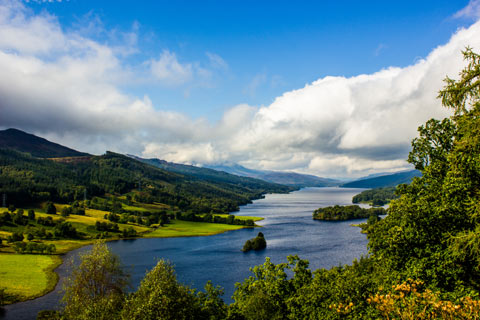
One of Scotland’s most famous viewpoints is Queen’s View, which is located in the heart of Highland Perthshire.
Here you will enjoy amazing views of Loch Tummel and the Schiehallion mountain peak.
The origins of Queen’s View have still not been 100% confirmed. Although the name may have come after Queen Victoria visited the area in 1866, others believe it originated from an earlier visit by Queen Isabella of Scotland, the wife of the mighty Robert the Bruce.
R - Rob Roy
The author, Sir Walter Scott, wrote about him, but he is, in fact, a real historical figure who led a very colourful life. Also known as the Robin Hood of Scotland, Rob Roy MacGregor was a man of many guises.
He supported the Jacobite Rebellion, calling for the return of the Stuart King. He became an outlaw, was pardoned, and married Mary, also a MacGregor.
You can visit lots of attractions across Scotland that have links with Rob Roy, like Sir Walter Scott’s home, Abbotsford, where you can see his gun. You can take a cruise on Loch Katrine to see Factor’s Island, where Rob Roy imprisoned the Duke of Montrose’s factor, then visit his grave in the little village of Balquhidder.
S - Skye
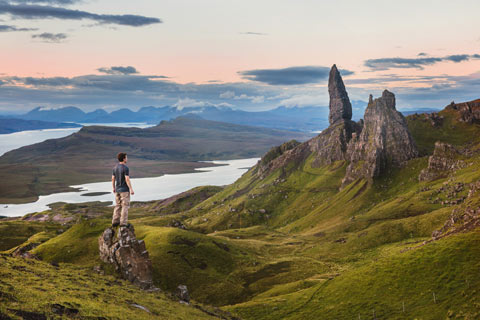
Visitors to Skye, the largest of the Inner Hebridean islands, will experience jaw-dropping views, wildlife including eagles, dolphins, red deer, and even dinosaurs. Well, dinosaur fossils at the very least!
The castles of Clan MacDonald and MacLeod are also based in Skye, along with 12 Munros and the Trotternish Ridge - a hillwalkers paradise.
And of course, you cannot forget about the romantic links to the Jacobite Rebellion and Bonnie Prince Charlie.
T - Torridon
A small village in the Northern Highlands that is surrounded by stunning scenery and amazing natural life. See some of Mother Nature’s finest work with mountains made of Torridonian sandstone (that’s over 750 million years old), Lewisian Gneiss (over 2600 million years old), plant life, lochs, and wildlife.
U - Unicorn
Scotland’s national animal is the unicorn because, according to Celtic folklore, it stood for purity and innocence, together with supremacy and power.
This mythical creature appeared on the Scottish Royal Coat of Arms in the 12th Century. In 1603, King James VI of Scotland became King James I of England and Ireland. To show that the countries were united under his crown, he replaced one of the unicorns on his crest with a lion, the national animal of England.
As the unicorn is the strongest of all animals, it appeared on the crest in a chain to symbolise the power of the King.
V - Vikings
The Vikings left their legacy in Scotland after arriving to raid the land. The role of the Vikings in Scotland is not well understood due to a lack of records, but we know that their involvement was sometime between the 8th and 15th centuries.
Some well-known Scottish place names originated with the Vikings, including Orkney, the Shetlands, and Caithness.
In fact, the Vikings may even have been involved in the establishment of Alba, now better known as Scotland.
W - Whisky
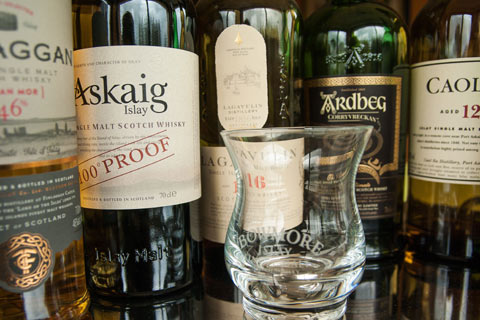
Whisky is Scotland’s national drink and one of our largest exports.
Scotch whisky can only carry this title if it has been aged in Scotland for at least 3 years and bottled here too.
Home to over 100 distilleries, Scotland is dedicated to this golden drink, even devoting an entire month to whisky!
May is officially whisky month and hosts lots of themed events and festivals.
Many distilleries are open to the public where you can get a behind-the-scenes tour to learn the tradional methods used in the production process and enjoy a tutored tasting of the end product.
Y - The Young Pretender
Prince Charles Edward Stuart was affectionately nicknamed Bonnie Prince Charlie. He is famed for leading the second Jacobite rebellion in 1745.
After his defeat at the Battle of Culloden in 1746, he fled and managed to evade capture, famously using a disguise to sail “Over the sea to Skye” with the help of Flora MacDonald.
Eventually, he returned to France, and despite having been in Scotland for only a year, he is now irrevocably tied to our history and is considered a Scottish hero.
Z - Edinburgh Zoo
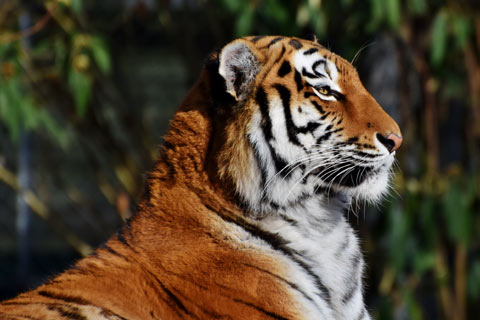
The Royal Zoological Society of Scotland hosts over 800,000 visitors each year.
Edinburgh Zoo has been open since 1913 and plays a significant role in the conservation of many animals.
There are over 1,000 rare/endangered animals, including giant pandas, penguins, monkeys, and tigers.
This popular attraction is situated just outside the city centre and offers a great day out for the whole family.