
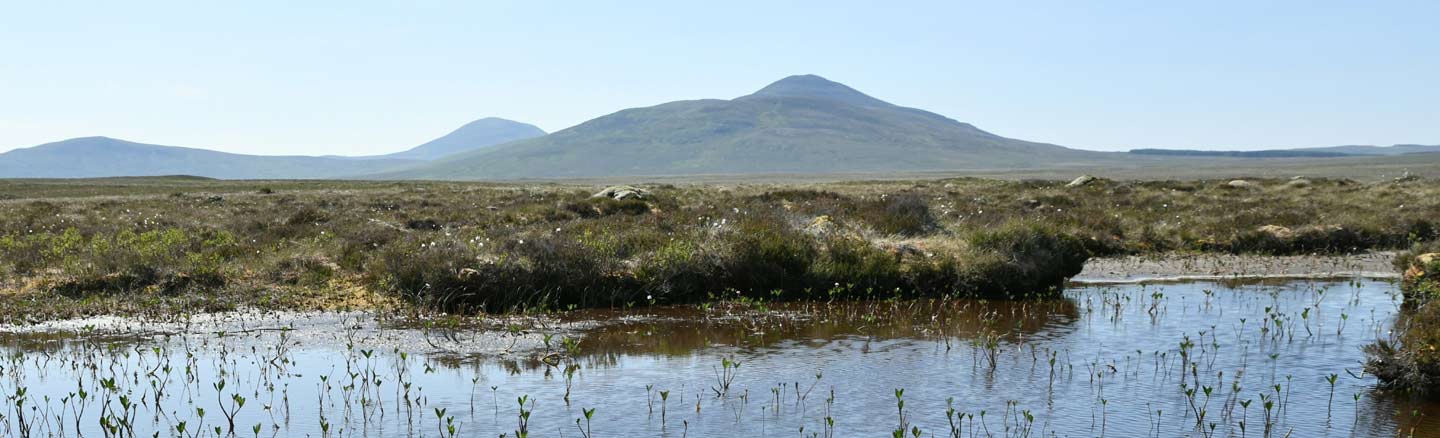
We’ll make a promise to you – by the time you’ve read this Guide to The Flow Country World Heritage Site, you’ll look at blanket bogs in a different light!
The Flow Country, Scotland’s wild heart, is a mesmerising expanse of peat bogs and wetlands rich in biodiversity. It is a sanctuary for rare wildlife and a vital carbon sink. With its tranquil beauty and untamed landscapes, the Flow Country attracts explorers eager to experience Scotland at its purest form. Read on to discover more.
What is the Flow Country?
The Flow Country is one of Europe’s last great wildernesses - a vast, rolling expanse of blanket bog stretching across Caithness and Sutherland in the far north of Scotland. Formed over thousands of years, its deep peatlands store enormous amounts of carbon, making it one of the world’s most important natural climate regulators.
What makes the Flow Country unique?
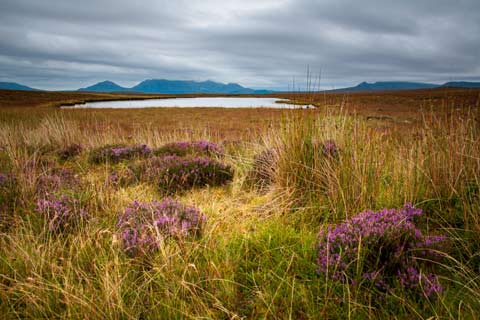
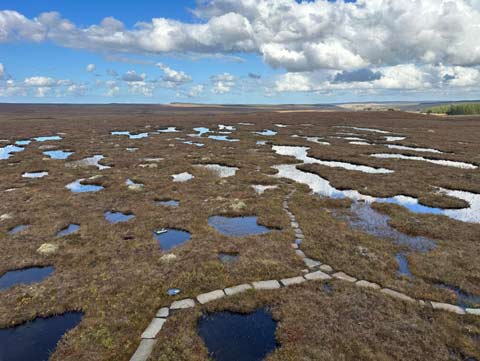
The blanket bogs that make up the Flow Country thrive in areas with cooler weather and plenty of rain – so it figures that Scotland is home to such a significant piece of land! An area of peat, pools and often a lack of trees makes a blanket bog easy to spot.
The Flow Country is a birdwatcher’s paradise, home to rare and stunning species. From the haunting call of the red-throated diver to the elegant flight of the hen harrier, its wetlands and peat bogs provide a safe haven for nesting birds.
It would be prudent to keep your wits about you, though - snakes also call the Flow Country their home, including Adders, which also happen to be the only venomous snake to live in the UK.
Why is it important for the environment?
We also mentioned that the blanket bog has environmental benefits, which stem from a process called carbon sequestration and storage.
This means that carbon dioxide is removed from the atmosphere, which in turn reduces the amount emitted and is thought to be important in our fight against global warming.
Where is the Flow Country?
The Flow Country lies in the north of Scotland, covering vast areas of land – 400,000 hectares (1,500 square miles) - including the counties of Caithness and Sutherland.
Also known as the Flow Country, this bog plays an essential role in protecting the environment, wildlife and even history (some archaeological sites have been uncovered here).
Becoming a UNESCO World Heritage Site
The Flow Country’s UNESCO World Heritage nomination journey started in 2017, in an effort to preserve its unique peat bog ecosystem. A submission to UNESCO was made in 2021, with the award being made three years later, when this unique region of Scotland was awarded UNESCO World Heritage status, confirming the Flow Country’s status as a natural treasure of international importance.
Joining iconic sites like Neolithic Orkney, The Forth Bridge and Edinburgh’s Old and New Town, Scotland now has seven UNESCO World Heritage Sites.
Check out our blog to discover more about UNESCO World Heritage Sites.
Wildlife and nature of the Flow Country
The Flow Country is a birdwatcher’s paradise, home to rare and stunning species. From the haunting call of the red-throated diver to the elegant flight of the hen harrier, its wetlands and peat bogs provide a safe haven for nesting birds.
Across the Flow Country, you’ll find some of Scotland’s most celebrated animals, including red deer, otters and little water voles.
A diverse ecosystem thrives here. The mosses and shallow pools create the ideal habitat for a wide range of insects and invertebrates. Over 500 species of moths and butterflies have been recorded, while dragonflies thrive in the bog pools. The rarest animal in the Flow Country is the Freshwater Pearl Mussel, which is now an endangered species.
It would be prudent to keep your wits about you, though - snakes also call the Flow Country their home, including Adders, which also happen to be the only venomous snake to live in the UK.
Things to do in the Flow Country
Grey Cairns of Camster
These two remarkably well-preserved Neolithic burial monuments are believed to be over 5,000 years old and offer remarkable insights into life in the Northern Highlands during prehistoric times.
There are two main cairns: The Camster Long, which extends to over 60 metres, and The Camster Round, a circular cairn containing a central burial chamber.
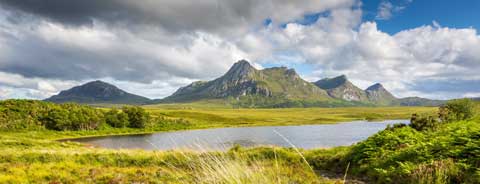
Ben Loyal
This striking mountain, often called the Queen of Scottish Mountains, rises sharply from the wild moorlands of Sutherland with a silhouette that feels almost sculpted.
Made of syenite, a type of intrusive igneous rock that forms deep underground. Over millions of years, erosion stripped away the surrounding material, leaving the jagged tors and peaks we see today.
Varrich Castle
Perched on a rocky promontory near the village of Tongue, the history of Varrich Castle is lost in the mists of time. It’s thought the stronghold may date back to Viking times, or even earlier.
Later, the castle was controlled by the Clan MacKay. The keep offers a viewpoint with an amazing vista of the Kyles of Tongue and Ben Loyal.
Cnoc Craggie
This mesmerising viewpoint offers views of Loch Loyal, where sightings of Birds of Prey such as Golden Eagles and Osprey are common.
Forisinard Flowsd Visitor Centre
RSPB Forsinard Flows Visitor Centre & Lookout Tower is the ideal introduction to the vast peatland wilderness of the Flow Country. Set beside the remote Forsinard railway station on the Far North Line, the centre offers engaging displays on the area’s rare wildlife and globally important peatlands before leading visitors onto the Dubh‑lochain Trail, a gentle boardwalk weaving through pools, mosses and open bog.
The highlight is the striking Flows Lookout Tower, a wooden structure rising above the landscape to reveal sweeping views of lochans and patterned peat. The tower contains live nest screens and is the perfect place to observe wild birdlife, including Golden Plovers, Arctic Skuas and Greenshanks.
Crask Inn
This Drovers Inn, which dates from 1815, is the most isolated Inn on the British Mainland. The famous engineer Thomas Telford built the single-track road linking the hotel to Lairg and Altnaharra in 1819.
Family-run, the Crask Inn has 5 bedrooms and provides true Highland Hospitality to residents and travellers who stop to enjoy lunch or an evening meal.
Explore the Flow Country with Scottish Tours
We make it easy to discover the many highlights of the Northern Highlands with a range of options available from Inverness and Edinburgh.
Book your Scotland Tour today.
| TOUR TIP: Scotland's Extreme North West 4 days/3 nights from Edinburgh & Glasgow |
Picture credits: VisitScotland and Shutterstock