
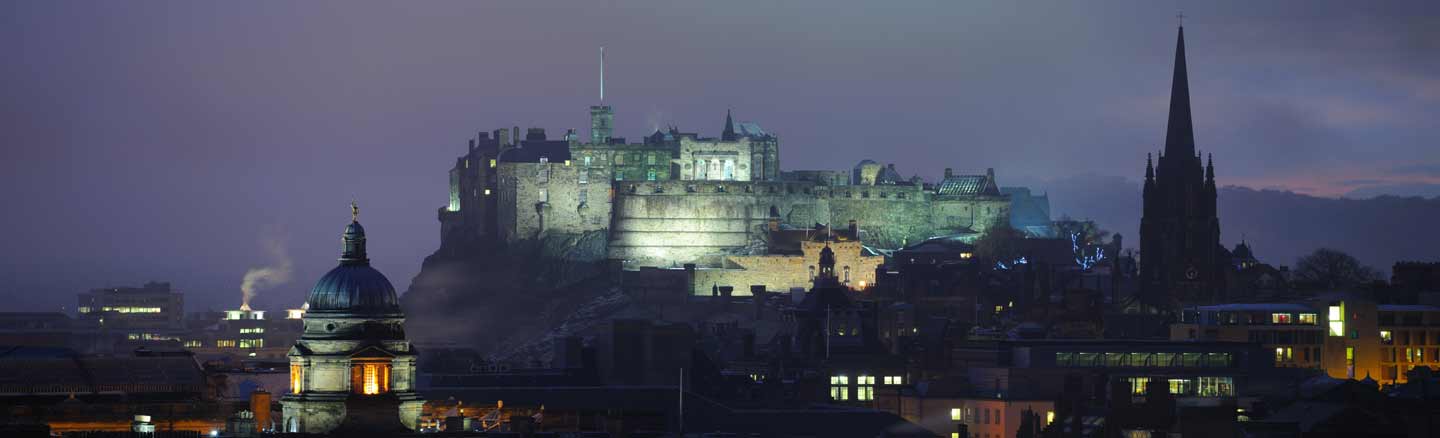
From royal palaces to lonely Highland strongholds, these castles are said to be home to restless spirits, spectral figures and eerie happenings. In this blog, we’ll look at some of the most haunted castles in Scotland, where history and legend walk hand in hand.
Whether you’re a firm believer in the supernatural or simply enjoy a good ghost story, Scotland’s haunted castles offer a unique way to experience its history. So why not turn down the lights and read on?
1. Edinburgh Castle - Edinburgh
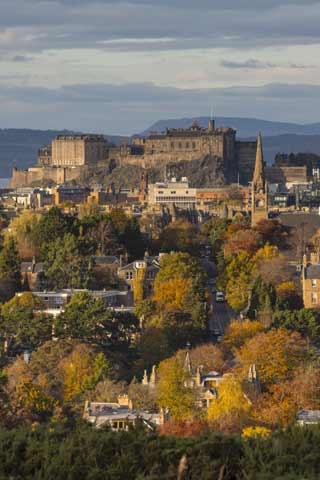
Perched atop an ancient volcanic rock, Edinburgh Castle is one of Scotland’s most famous landmarks - and one of its most haunted. With a history that stretches back nearly a thousand years, it has seen battles, sieges, executions and imprisonments.
One of the most famous ghosts here is the Headless Drummer Boy, first sighted in 1650 when Oliver Cromwell’s forces threatened the castle. Legend says his appearance is a warning of impending danger.
Another spirit is the Lone Piper, who vanished while exploring the tunnels beneath the Royal Mile centuries ago. Today, visitors claim to hear faint strains of bagpipe music beneath their feet.
The castle’s dungeons, where French prisoners were held during the Seven Years’ War and American sailors during the War of Independence, are said to be among the most paranormally active areas.
Visitors often report cold spots, the feeling of being watched, and unexplained touches.
2. Stirling Castle - Stirling
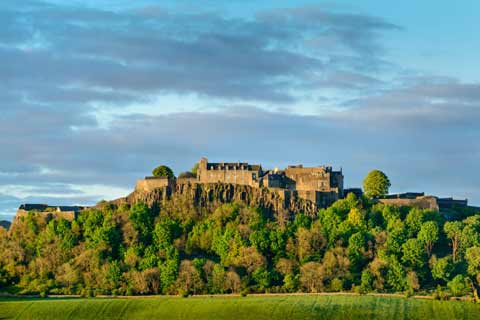
Stirling Castle is one of Scotland’s most important historic sites - a royal palace and strategic stronghold. It’s also home to one of the country’s most famous ghosts: the Green Lady.
According to legend, she was a servant who saved Mary, Queen of Scots from a fire in her bedchamber. The woman perished, and her spirit is said to still wander the castle, dressed in green.
Visitors and staff have reported sudden drops in temperature and fleeting glimpses of a green figure disappearing through walls.
Another spectral presence is that of the Highland Soldier, often seen near the ramparts. Some visitors mistake him for a tour guide in costume, until he vanishes into thin air.
3. Fyvie Castle - Aberdeenshire
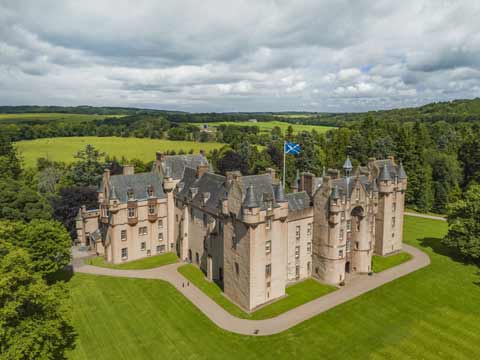
Fyvie Castle in Aberdeenshire is a magnificent baronial mansion dating back to the 13th century. Its grand halls and spiral staircases are said to be haunted by the ghost of Dame Lilias Drummond, who died under mysterious circumstances in 1601.
When her husband remarried, Lilias is said to have carved her name on the stone window ledge outside the bridal chamber, a mark that remains to this day. Guests and guides have reported hearing sighs, rustling silk dresses, and unexplained footsteps.
Fyvie is also associated with the Curse of the Weeping Stones. According to legend, three sacred stones were taken from a local river. Until they are returned, the castle is doomed to misfortune. The weeping sound of water is said to echo through the halls at night.
4. Dunnottar Castle - Aberdeenshire
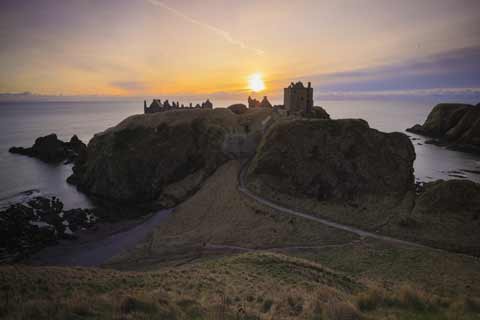
Few castles in Scotland are as dramatically situated as Dunnottar. Perched on a rocky headland overlooking the North Sea, this fortress has witnessed sieges, royal visits and bloody conflict.
Dunnottar Castle is said to be haunted by several spirits. The most famous is the Green Lady, thought to be searching for her lost children. Witnesses describe seeing her wandering the brewery or moving silently along the clifftops before vanishing.
Another apparition is a Cavalier in full armour, believed to be a soldier from the 17th century. Paranormal investigators have recorded unexplained temperature changes and faint whispers near the castle’s dark stairways and ruined chambers.
5. Castle Fraser - Aberdeenshire
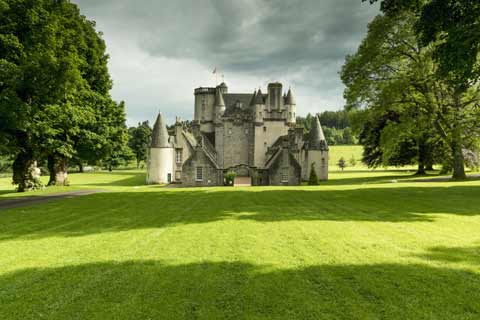
This impressive 15th-century fortress has all the ingredients for a great ghost story: creaking staircases, hidden rooms, and a tragic past.
Castle Fraser is said to be haunted by the ghost of a young woman who was brutally murdered in one of the upper bedrooms. According to legend, her bloodstains were impossible to remove from the floor, and to this day, visitors report hearing her footsteps echoing through the hallways.
Other paranormal activity includes doors slamming on their own, objects moving without explanation, and ghostly whispers in the tower rooms.
6. Crathes Castle - Aberdeenshire
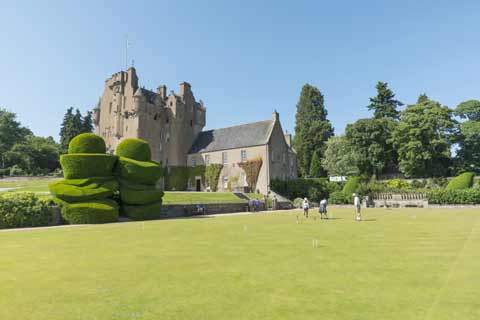
Crathes Castle is a picturesque 16th-century tower house set amid beautiful gardens, but beneath its charm lies a darker story.
The most famous ghost here is the Green Lady (not to be confused with those at Stirling or Dunnottar). Dressed in a flowing green gown and carrying an infant, she has been seen by visitors and staff alike, often near the Great Hall fireplace. During renovation work, the skeletal remains of a woman and child were found hidden behind the wall, fuelling speculation that the haunting has a tragic origin.
The atmosphere of Crathes can be unsettling at night, with reports of sudden chills and strange sounds echoing through the corridors.
7. Cawdor Castle - near Inverness
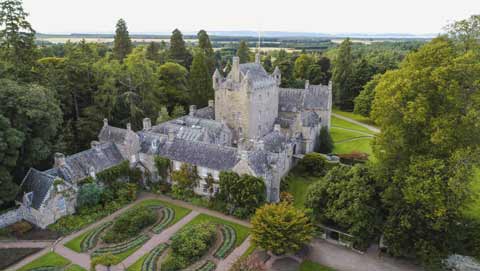
Cawdor Castle is forever linked with William Shakespeare’s Macbeth, though the real castle was built after the historical king’s time. Today, it’s known not only for its literary associations but also for its ghostly reputation.
Among the spirits said to haunt Cawdor is a young woman in blue, believed to be the ghost of a girl who tried to elope against her father’s wishes. She fell - or was pushed - from the tower. Visitors have reported feeling a cold rush of air and catching fleeting glimpses of her spectral form.
Unexplained footsteps and doors opening on their own have also been noted by staff during quiet evening hours.
8. Inveraray Castle - Argyll
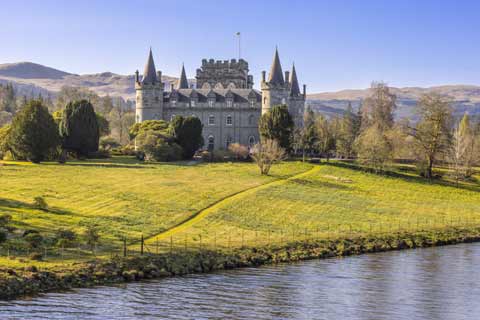
Set on the shores of Loch Fyne, Inveraray Castle is the ancestral home of the Dukes of Argyll and the clan seat of the Campbells — and it comes with more than a little atmosphere after dark.
One of its best-known spirits is the Harpist, said to be the ghost of a musician killed during the Jacobite Rising of 1745. There have been many reports of harp music drifting through empty rooms, as if someone is still practising long after everyone has gone to bed.
There’s also said to be a child ghost, often glimpsed in the upper corridors. Rather than feeling unsettling, many visitors describe a sense of warmth and curiosity. If the stories are true, Inveraray’s ghosts seem more mischievous than menacing — quietly reminding people that the castle’s past is never too far away.
9. Ackergill Tower - Caithness
Standing dramatically on the Caithness coastline, Ackergill Tower is said to be haunted by the spirit of Helen Gunn, known as the “Beauty of Braemore.” The legend has it that she was abducted by a rival clan and imprisoned in the tower. Faced with a forced marriage, Helen is said to have thrown herself from the battlements rather than surrender her freedom.
On stormy nights, there have been sightings of a woman in white standing silently on the tower roof, only to vanish into the rolling sea mist. The crash of waves and faint sounds of weeping are often said to follow, leaving Ackergill Tower with a reputation as one of Scotland’s most haunting coastal strongholds.
Scotland’s most haunted castle:
10. Glamis Castle - Angus
So if you’re searching for the most haunted castle in Scotland, one name appears again and again: Glamis Castle, in the heart of Angus.
Known for its grand towers, royal connections, and centuries-old legends, Glamis is often described as Scotland’s most haunted castle. But what makes it so famously ghostly? Let’s step into the shadows of history and find out.
A Castle Steeped in History
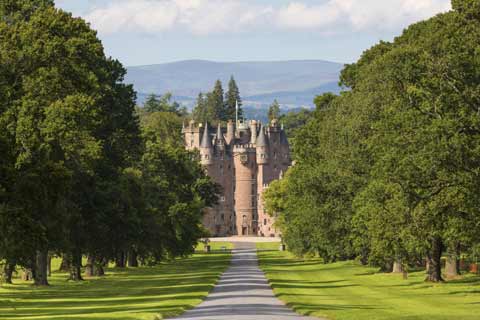
Its history stretches back to the 14th century, when the lands were granted to the Lyon family by King Robert II of Scotland. Over the centuries, the castle has grown from a fortified tower house into one of the most beautiful and mysterious stately homes in the country.
The castle was once the family seat of the Earls of Strathmore and Kinghorne, and it remains in the hands of the Lyon family today. It’s perhaps best known as the childhood home of Queen Elizabeth The Queen Mother, and the birthplace of Princess Margaret, Countess of Snowdon.
Royal connections aside, Glamis has inspired literary figures and captivated visitors for centuries. Even William Shakespeare gave it a dark place in literary history by setting parts of Macbeth within its walls.
But behind the grand façade lies a chilling past: secret rooms, ghostly figures, and blood-curdling legends that have earned Glamis Castle its haunted reputation.
The Grey Lady
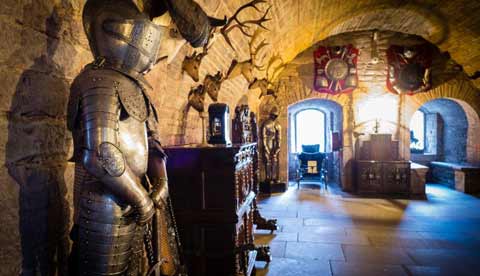
Legend tells of The Grey Lady, thought to be the spirit of Lady Janet Douglas, falsely accused of witchcraft in 1537, she was burned at the stake within the grounds of Edinburgh Castle. Her ghost is said to haunt the chapel at Glamis Castle, where a pew is always left empty in her honour.
Then there’s the Monster of Glamis, a shadowy family secret said to have been locked away in a hidden room for years. On stormy nights, guests claim to hear footsteps, laughter and whispers in empty corridors.
Glamis is also home to the legendary Earl Beardie, who is said to have played cards with the Devil and lost his soul. Visitors have reported the sound of shuffling cards and echoing laughter after dark.
Why Are So Many Scottish Castles Haunted?
Scotland’s castles are centuries old. Many were built in times of war, clan feuds and royal intrigue. They’ve witnessed sieges, betrayals, executions and heartbreak. Over time, these stories have grown into legends, with some locals and visitors swearing they’ve encountered something they can’t explain.
The country’s dramatic landscapes only heighten the sense of mystery. Misty glens, dark lochs and rugged stone walls create the perfect stage for ghost stories. Whether you’re a sceptic or a believer, walking through these ancient buildings after dark can feel as though the past is very close indeed.
Visit Scotland’s castles with Scottish Tours
Whether drawn by majestic architecture, dramatic landscapes, or centuries of history, visiting Scotland’s castles is an unforgettable journey through time. With tours departing from Edinburgh, Glasgow, Inverness and London, we make it easy to visit your favourite fortress.
If you want to explore the best castles in Scotland, choose a Scotland Tour from Scottish Tours.
| TOUR TIP: Scottish Dream 8 days/7 nights from Glasgow |
Image credits: Glamis Castle, Shutterstock and VisitScotland