
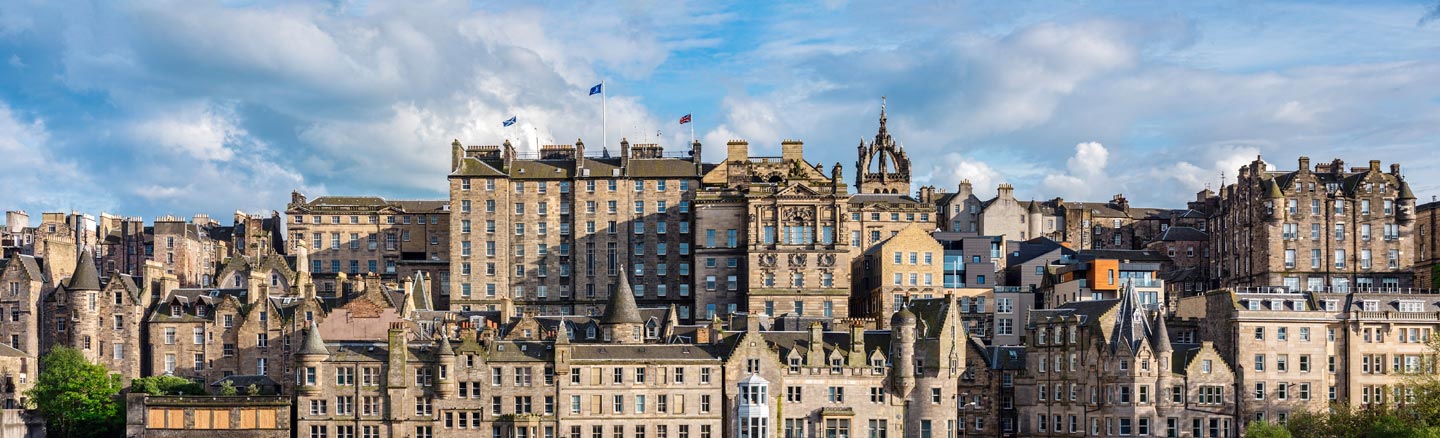
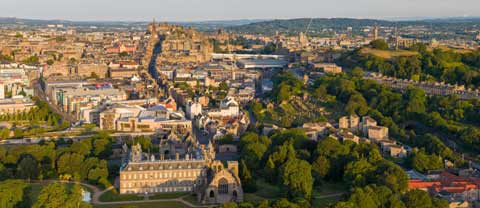
The Royal Mile in Edinburgh is one of Scotland's most famous and historic streets. The mile-long thoroughfare starts at Edinburgh Castle, which sits atop an extinct volcano, and runs all the way down to the Palace of Holyroodhouse, the King's official residence in Scotland. Along the way, you'll find many buildings and landmarks that have shaped Scotland's history over the centuries.
It's also a lively street full of restaurants and thriving bars, making it the ideal place to enjoy a drink, a meal (or both!) when you are here.
We'll discover more about this famous street in this Guide to the Royal Mile, so read on!
History of the Royal Mile
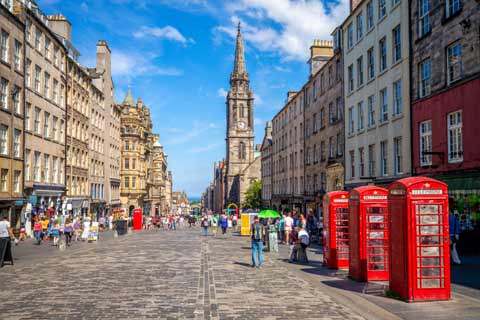
The Royal Mile is actually made up of five sections: Castlehill, Lawnmarket, High Street, Canongate, and Abbey Strand. Combined, they became known as the Royal Mile as it became a processional route for Scotland's Kings and Queens to travel between the Castle at the top of the street and the Palace at the bottom.
The Royal Mile was the backbone of Edinburgh's Old Town and became a bustling commercial centre with all kinds of merchants and manufacturers. Constrained by the city wall, the area was overcrowded, with up to 40,000 residents living in very unsanitary conditions.
With no plumbing, human waste was emptied into the street with a cry of "Gardyloo" (a version of the French term Gardez l'eau, meaning look out for the water!). A container of something horrible would be tipped out of a window, as pedestrians would scramble for cover below.
Scotland's Capital
Edinburgh officially became the capital of Scotland in 1437, replacing Scone, after King James I was stabbed to death at Perth, where he was spending Christmas.
The following year, his heir was smuggled into Edinburgh Castle to be crowned King of Scots at the age of just 6. King James II was killed, aged 30, when a cannon exploded beside him during the siege of Roxburgh Castle.
Edinburgh had established itself as Scotland's capital. A wall had been built to protect the city, and the Royal Mile was at its centre. Here, the gentry, merchants and commoners lived in the towering "lands", as these tenements were called. The upper classes on the lower floors and the ordinary folk higher up.
As the spine of the Old Town, it is therefore no surprise that the Royal Mile has witnessed important events in Scottish history.
The tragic tale of Mary, Queen of Scots
In 1566, Mary, Queen of Scots, gave birth to her son, James VI (later to be the first King of Great Britain), at Edinburgh Castle. Earlier that year, at the opposite end of the Royal Mile, her private secretary, David Rizzio, was stabbed to death in Holyrood Palace while having supper with the Queen. A brass plaque marks the spot where this grizzly event took place.
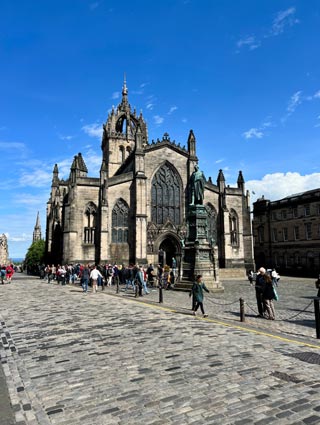
During the 1560s, crowds gathered at St Giles Cathedral to hear the fiery sermons of John Knox during the Reformation, when Scotland changed to the Protestant faith from Catholicism. In the High Street stands John Knox house, which dates from 1490. Despite its name, there is no proof that Knox actually lived there.
Also in the High Street sits Parliament House (not to be confused with the modern building in the Canongate). It was here that the Scottish Parliament met from 1639, and crowds gathered to protest at its dissolution when the Parliaments of Scotland and England merged in 1707. After that date, Scotland was no longer an independent country.
Royal Mile Tourist Attractions
Walking along the Royal Mile, you will see several well-known Scottish attractions. Here are a few highlights.

Edinburgh Castle
Edinburgh Castle sits atop an extinct volcano and is one of Scotland's most popular tourist attractions. It houses the Scottish Crown Jewels, the One O'Clock Gun, and the National War Museum of Scotland. You can learn more about the Castle and its many attractions here.
St Giles Cathedral
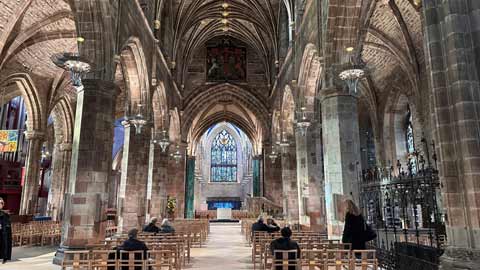
St Giles' Cathedral began as a Romanesque church and later became a Presbyterian church, which it remains today. Inside, you can see detailed stained-glass windows and a statue of John Knox. Some parts of the cathedral date from 1100, and it became a cathedral in 1633.
In September 2022, the coffin of Queen Elizabeth II lay in state at the cathedral for 24 hours. After a Service of Thanksgiving, the late Queen left Scotland for the last time.
Outside St Giles' Cathedral is the "Heart of Midlothian", embedded in the pavement and marking the site of the old Tolbooth prison.
Palace of Holyrood House
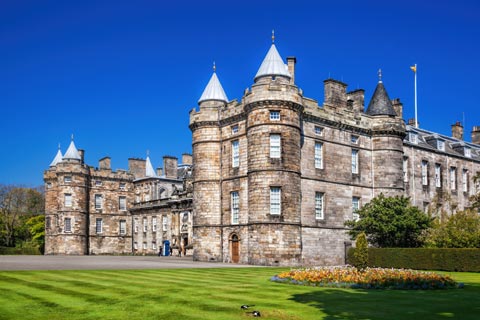
Holyrood Abbey was founded by King David I in 1128 after a hunting accident. Legend has it that the King was attacked by a stag while he lay wounded on the ground. As the stag drew back to make the last fatal blow, a cross appeared above its antlers. The King grabbed the cross, and the stag retreated. The King ordered that an abbey be built on the site, which included a guest house for Royal visitors.
King Charles II began building the existing Palace, next to the Abbey, in 1671. The Palace was designed around an elegant courtyard, and the State apartments boast ornate plasterwork ceilings and tapestries.
The Privy Chamber was created for King Charles II in the 1600s. Today, the Monarch uses the room for private meetings and as an office.
Writers' Museum
The Writers' Museum is situated just off Lawnmarket and is dedicated to three of Scotland's most famous writers - Robert Burns, Sir Walter Scott, and Robert Louis Stevenson.
The Museum of Edinburgh is located in the Canongate and presents the city's history, including some of its darker stories.
For something different, The Scotch Whisky Experience has been teaching visitors about the art of whisky making since 1988. Its collection includes over 3,000 bottles of Scotch whisky and is one of the largest in the World.
Royal Mile Bars and Taverns
The Royal Mile is also known for its busy pub scene. Here are a few places to visit after exploring the city.
The World's End on High Street serves traditional pub food. Its name comes from the Flodden Wall, which once marked the edge of the city. People believed that anything beyond the wall was outside Edinburgh, so the pub became known as the end of the World.
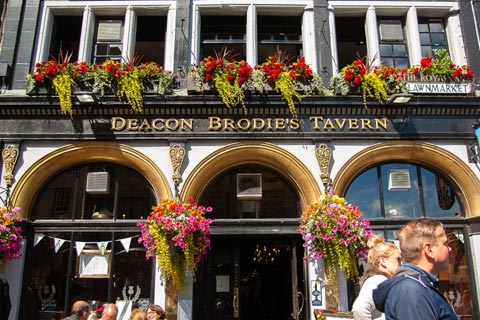
Then there's Deacon Brodie's Tavern on Lawnmarket, named after the notorious Deacon Brodie, a highly respected businessman by day and a thief by night. He is said to be the inspiration for the story of Jekyll and Hyde.
The city's oldest hostelry is the White Hart Inn on Grassmarket, which dates from 1516.
What is a close in Edinburgh?
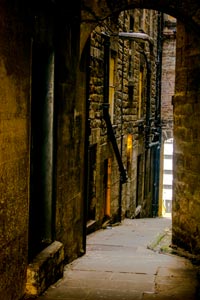
When walking along the Royal Mile, you will see alleyways called "closes" and "wynds" that run between the buildings in the Old Town of Edinburgh. They are an important part of Edinburgh's architectural and cultural heritage and offer visitors a glimpse into the past.
The "closes" are akin to lanes or narrow passageways, whereas "wynds" are narrow lanes that branch off larger streets (such as closes).
One notable example is Mary King's Close, named after Mary King, who sold fabric on the streets during the 17th century, and which served as a place for buyers and sellers to gather. However, when the Royal Exchange was being built, this once-open space became overcrowded and unsanitary, leading to its closure.
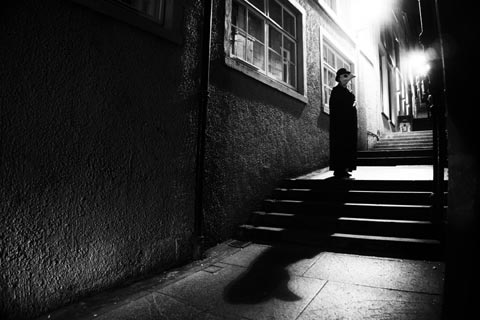
When the close was rediscovered, it was found to be very well-preserved and is now a visitor attraction where locals and visitors alike can better understand the lives of the people who once lived, worked, and even perished there. A walk down this close will showcase the interesting way it was built – buildings were often built on top of each other, with upper floors overhanging the street below.
This created a unique and unusual architectural style that is still visible today.
In 1645, Edinburgh suffered its worst outbreak of "The Plague". The nature of the buildings and the way people lived in very close quarters was the ideal environment for the plague to take a grip, resulting in this disease significantly impacting those within the close quarters, with 1,000s unfortunately losing their lives.
UNESCO World Heritage Site
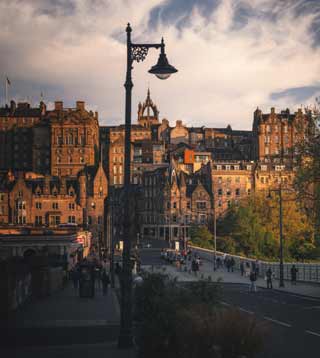
Edinburgh's Old and New Towns were granted UNESCO World Heritage Site status in 1995. Both areas are famed for their historic buildings, rich cultural heritage and the way they work together in perfect balance.
In the Old Town, enjoy medieval townscapes and a wealth of architectural and historical features that make it a fascinating destination for visitors to Scotland.
During your visit, you'll be able to take in some of the Gothic and Renaissance architecture on offer, along with the vibrant and thriving community that can be found within the Old Town and enjoy the art and cultural events that are held throughout the year… and of course, take a trip down the Royal Mile!
Explore Edinburgh with Scottish Tours
Uncover Edinburgh's fascinating history with Scottish Tours. Walk the cobbled streets of the Royal Mile, explore ancient Edinburgh Castle and discover the hidden treasures of the Old Town.
Book one of our amazing tours, and let us introduce you to the real Scotland.
Browse our tours and book today.
| TOUR TIP: Edinburgh City Tour Hop-on, Hop-off Tour |