
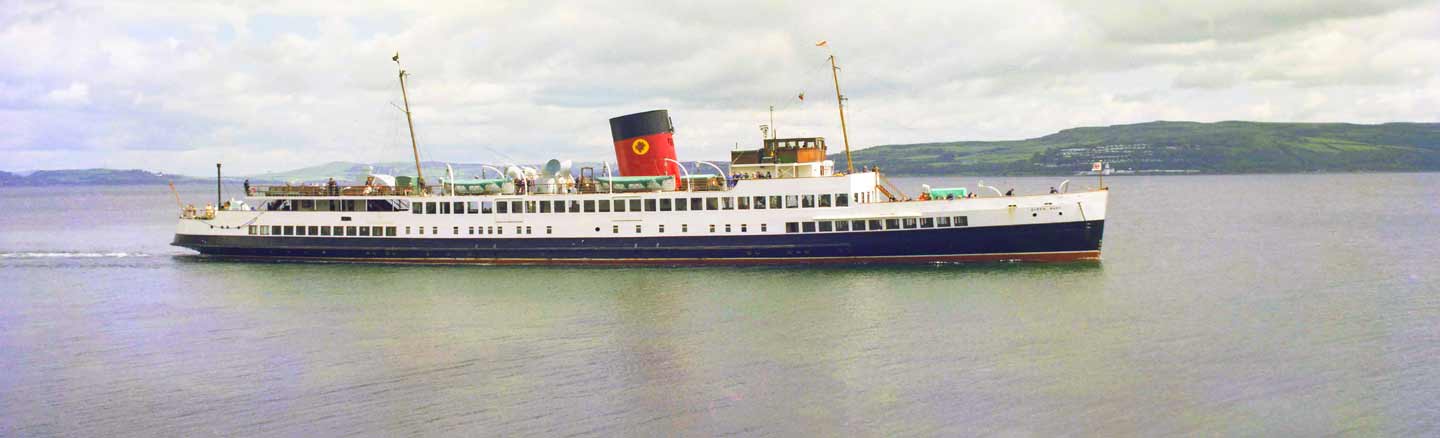
In February 2026, Caledonian MacBrayne Ferries, better known as CalMac, celebrated 175 years of operation connecting Scotland's mainland with its island communities. For generations, the company's ferry services have provided islanders with access to healthcare, education, employment and trade, while opening up the Highlands and Islands to visitors from across the world.
In this blog, we're going to celebrate 175 years of a real Scottish institution and look at the man whose name is a byword for travel in the Highlands. Welcome aboard!!
The beginning: PS Pioneer and the First Clyde Sailings
It all started on Monday, 10 February 1851, when the PS Pioneer set sail from Glasgow's Broomielaw bound for Tarbert and Ardrishaig on Loch Fyne. This was the daily schedule for the steamer, which also included calls at Greenock, Dunoon, and Rothesay on the Firth of Clyde.
David MacBrayne’s Early Partnership
On this day, things were slightly different. The Pioneer and her sister ships had new owners. Shipping line G & J Burns had transferred their West Highland shipping operation to a new company, David Hutcheson and Company.
The partners in this new business were David Hutcheson, who had been the Chief Clerk at G & J Burns, his brother Alexander, and David MacBrayne, a nephew of the Burns brothers.
Who was David MacBrayne?
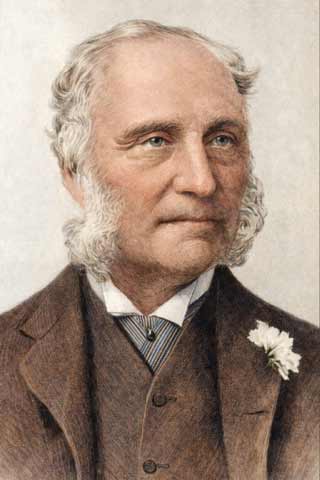
He was born in Glasgow in 1817. Originally, he trained as a printer, but then got a job as a shipping clerk. His wife, Elizabeth, was the sister of George and James Burns, the shipping pioneers.
When the Burns brothers decided to concentrate their business interests on their Irish shipping routes and their financial involvement in the famous Cunard Line, they divested themselves of their marginal West Highland operations to the new company.
This was during a period in Scotland known as the Highland Clearances, when poverty was widespread, and highlanders were “encouraged” by wealthy landowners to relocate either overseas to New World colonies or south to Glasgow. The money made by the Highland shipping operation was sparse, to say the least.
Under the new leadership, the company expanded its operations over the next few years. It was not long until it was serving most of the larger islands off the West Coast of Scotland, even reaching remote communities such as Stornoway on the Isle of Lewis.
The Royal Route and the Rise of Leisure Travel
Queen Victoria developed a deep love of Scotland and visited frequently from 1842 onwards. Alongside Prince Albert, she purchased Balmoral Castle on Deeside in 1852.
Five years earlier, she made a grand tour of the Scottish Highlands and Islands, sailing aboard the Royal Yacht. She visited Iona, the Kyles of Bute. Fort William and Loch Laggan.
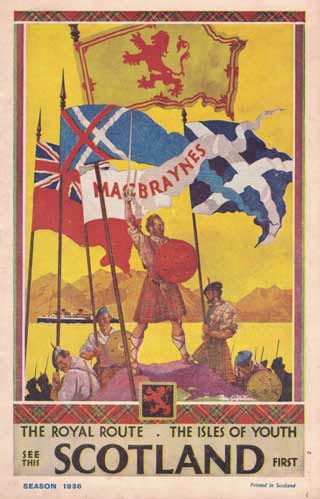
The company soon began promoting their leisure sailings as “The Royal Route”, following a similar route taken by Queen Victoria in 1847 from Glasgow to Inverness by way of Ardrishaig, Oban and Fort William.
In 1873, Queen Victoria sailed through the Caledonian Canal on board the Hutchieson steamer, Goldolier, accompanied by the two brothers.
These services focused on the growing popularity of scenic travel through the Highlands and Islands. For Victorian travellers, these steamer journeys offered a chance to experience remote landscapes that were otherwise difficult or impossible to reach.
The Formation of David MacBrayne Ltd
In 1876, David Hutchieson retired (his brother did likewise two years later). In 1878, David MacBrayne assumed full control of the business and the company was subsequently renamed David MacBrayne Ltd, marking the beginning of a new chapter in the development of ferry travel along Scotland's west coast. By this time, the original fleet of eight ships had grown to twenty.
Although MacBrayne was aged 65 at this time, under his leadership, services were extended to reach communities across the Inner and Outer Hebrides.
He remained an active member of the company's management until he died in 1907, aged 93.
MacBraynes for the Highlands
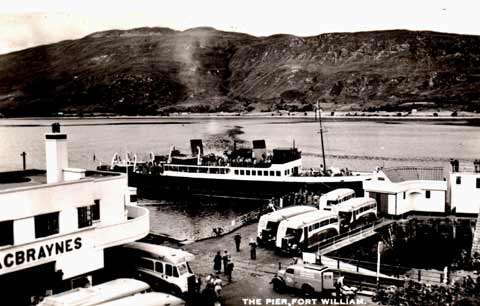
The company was now controlled by his two sons, the eldest of whom was also called David.
In addition to shipping interests, the company also started operating buses and lorries. Importantly, ferry routes were increasingly integrated with road and rail connections, creating one of the earliest coordinated transport systems in rural Scotland. This approach enabled passengers and goods to move more easily between the islands' ports and communities.
The importance of MacBraynes to life on the West Coast of Scotland is summed up in a paraphrase of Psalm 24 that was popular at the time:
"Unto the Lord belongs the Earth and all it contains,
Excepting the Western Isles, and they belong to MacBraynes."
Railway Ownership and Wartime Service
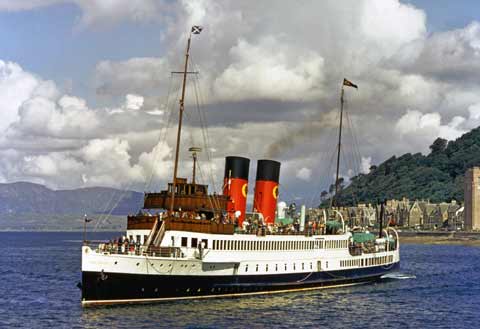
In 1928, the company found itself in a dire financial position, and control passed to Coast Lines Ltd and the London Midland and Scottish Railway Company (LMS).
With new owners and an injection of cash, most of the existing ships were replaced with newer vessels between 1928 and 1939.
The outbreak of the Second World War saw some of the fleet commandeered for naval service, while the older ships continued to provide reduced service to the islands, painted in battleship grey.
One of the most notable vessels was the TS King George V, which joined the fleet in 1935 when Turbine Steamers Ltd were taken over by MacBraynes. During World War 2 she was drafted as a troopship in the English Channel and served with distinction at the Dunkirk evacuation. After the war, she returned to Oban to operate cruises to Fort William, Mull, Iona and Staffa.
Coming of the Car Ferries
In 1948, the British railway companies were nationalised, which included the LMS.
In the post-war years, the number of cars travelling increased steadily. Each had to be winched aboard the ship, which was a slow and labourous process. The fleet was ageing, and it was becoming clear that new car-carrying ferries were required.
MV Hebrides, Clansman and Columba
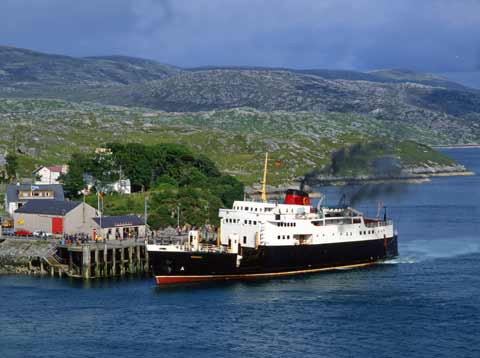
The Government enacted legislation in 1960 that allowed the Secretary of State for Scotland to order three ships to be leased to MacBraynes. Built in Aberdeen, the Hebrides, the Clansman and Claymore joined the fleet and, over their lives, performed well, serving the islands.
One of the ships still sails in Scottish waters. The ultra-luxurious Hebridean Princess cruise ship is no other than MV Columba, which has been extensively refurbished and rebuilt for her new role.
1973 Caledonian MacBrayne is born
The Scottish Transport Group was formed in 1969. As well as David MacBrayne, STG had other shipping interests in the Caledonian Steam Packet Co Ltd, which served routes primarily in the Firth of Clyde.
On 01 January 1973, the two organisations were merged to create Caledonian MacBrayne. The new organisation's house colours combined MacBrayne's red and black funnel colours with the Lion Rampant of Caledonian Steam Packet.
The Marine Motorway
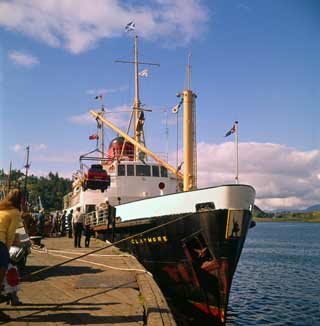
From then onwards, new Caledonian MacBrayne routes were established as it shifted from a traditional cargo-and-mail steamer network to a modern ferry operator, helping open up Scotland’s west coast to visitor travel.
The policy of the new organisation was to create a “Marine Motorway” of short routes served by modern car ferries capable of taking cars, coaches and lorries. The days of vehicles being winched on and off vessels were to be a thing of the past.
A new generation of roll-on roll-off ferries, such as MV Suilvan, MV Hebridean Isles and MV Isle of Mull, made it easier for travellers to take their own vehicles to the islands, including Skye, the Isle of Mull and the Outer Hebrides.
As holiday patterns changed in favour of overseas holidays, the number of excursions decreased over the years, and the elderly steamers were sold off. The 1947 paddle steamer, PS Waverley, is still operational and offers cruises throughout the British Isles. On Loch Lomond, the PS Maid of the Loch is being refurbished in the hope that she may sail again. While on the River Clyde, the TS Queen Mary is also being carefully restored, and hopes are high that she will once more be cruising.
CalMac in the 21st Century
Structural changes in 2006 created CalMac Ferries Ltd as the operating company and Caledonian MacBrayne Assets Ltd (CMAL), which owns the ports and vessels.
Dual-Fuel Ferries
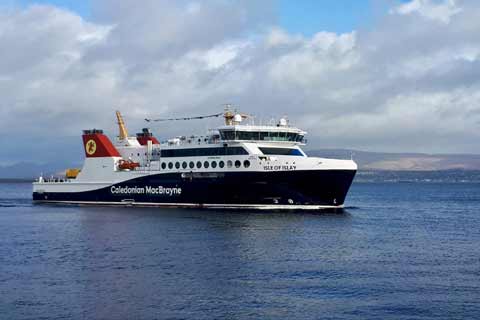
In recent years, the company has sailed through some troublesome waters, but a renewal programme is now in full swing.
The first of the controversial pair of dual-fuel ferries, MV Glen Sannox, is in service while her sister ship, MV Glen Rosa, is expected to be delivered later this year. Both will operate on the Isle of Arran route.
A quartet of ferries have been ordered from a shipyard in Turkey, with the first ship, MV Isle of Islay, having arrived in Scotland this week. She and her sister ship, MV Loch Indaal, will serve Islay and Jura while the other duo, MV Claymore and MV Lochmor, will serve on the little Minch routes between the Isle of Skye, Harris and North Uist.
Electric Ferries
A second order for a fleet of seven all-electric ferries has been placed with a shipyard in Poland. Delivery is expected to start in 2027, and the new ships will operate on shorter routes such as Lochaline to Fishnish (Mull), Colintraive to Rhobodach (Bute) and Sconser to Raasay.
Scottish Island Holidays with Scottish Tours
If you would like to explore Scotland’s islands, you’ve come to the right place.
From Arran and Islay in the south to Orkney and Shetland in the north, we’ve got the perfect selection of hand-picked Scottish islands holidays for you to consider.
Browse our Scotland Tours and book today.
Photo credits: Andrew Anderson, Tony Hardley Photography and Shutterstock
| TOUR TIP: Highlands and Islands 8 Days/7 Nights from Edinburgh |