
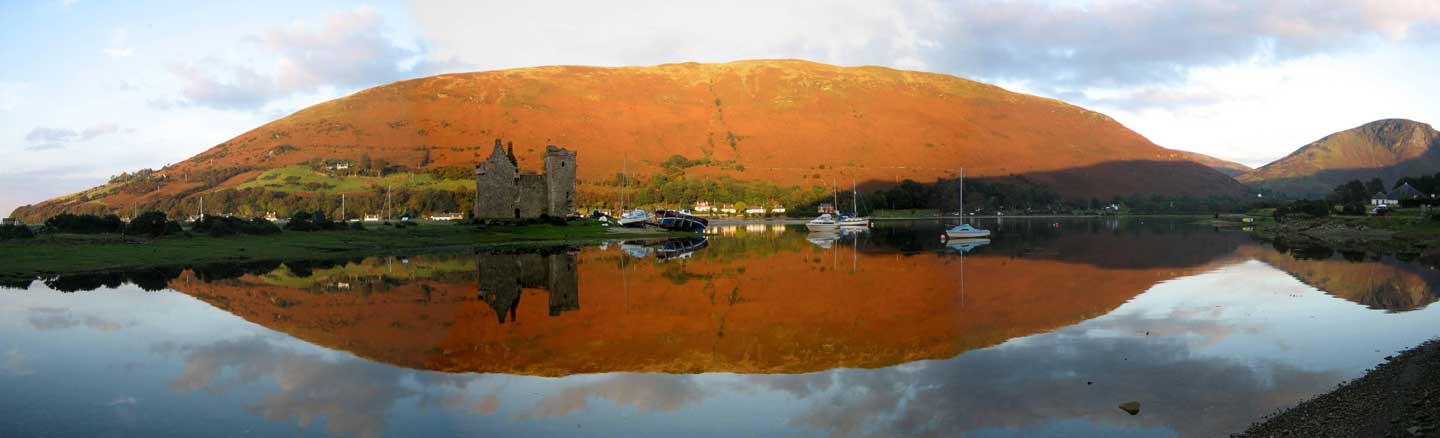
The Isle of Arran is often described as "Scotland in Miniature", and once you arrive, it's easy to see why. Within a compact area, you'll find rugged mountains, sweeping beaches, ancient stone circles, and picturesque coastal villages. Some of the best things to do on Arran include visiting whisky distilleries and castles, or enjoying forest trails and wildlife watching.
Below are some of the best things to do on Arran - from whisky tasting and mountain walks to castles, beaches, and local food.
Where Is the Isle of Arran?
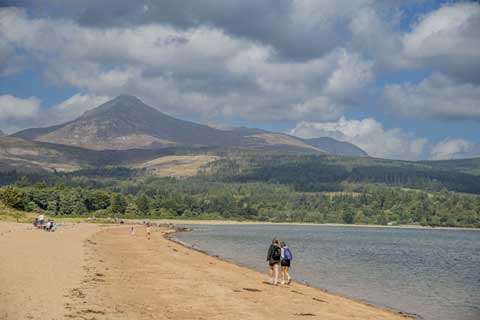
Arran sits in the Firth of Clyde, around 50 miles southwest of Glasgow. The island's northern half is all sharp peaks and Highland drama, while the south offers gentler landscapes and long stretches of coastline.
Most visitors arrive by Caledonian MacBrayne ferry from either Troon or Ardrossan to Brodick, a crossing that takes around an hour and offers beautiful views of Arran's mountain skyline as the ferry sails towards the island.
Thanks to its easy access and varied scenery, Arran has long been a favourite for walkers, whisky lovers, and anyone looking for a peaceful island break.
Ferries to Arran
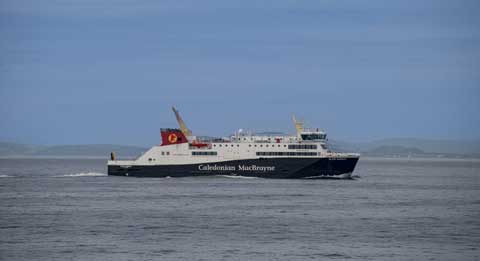
The main ferry route to Arran is from either Troon or Ardrossan to Brodick. It's a short crossing, and immediately the ropes are cast off, you can set your watch to island time and start to relax.
Arriving in Brodick is a highlight in itself: Goatfell rises behind the village, and as the ferry glides into the bay, there are wonderful views of Brodick Castle to enjoy.
In summer, it's wise to book ahead if you plan to bring a car.
Foot passengers should consider taking the ferry from Ardrossan, as trains from Glasgow Central connect directly at the ferry terminal.
Claonaig to Lochranza Crossing
The second of the ferry routes links Claonaig on the Kintyre Peninsula with Lochranza in the north - a popular option for travellers exploring the Kintyre peninsula and islands such as Islay and Jura.
Isle of Arran Attractions
Arran packs an impressive amount into a small island. The scenic coastal road loops around much of the island and connects small villages such as Brodick, Lochranza, Whiting Bay, Blackwaterfoot, and Kildonan.
The String Road cuts across the centre of the island and climbs to 768 ft (233 m) linking Brodick to Blackwaterfoot.
The island's changing landscapes contrast the rugged northern mountains with the gentler southern coastlines.
Isle of Arran Whisky
Whisky fans are in for a treat. Arran has built a strong reputation for single malt whisky, shaped by the island's pure water and maritime climate.
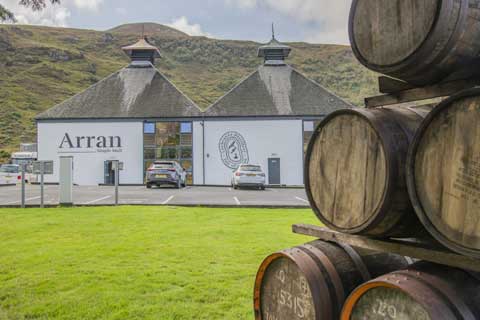
Lochranza Distillery is the island's original distillery, set among hills and close to the sea. Tours walk you through the full whisky-making process, culminating in tastings of the distillery's fine malts.
Lagg Distillery, in the south of the island, focuses on peated whisky inspired by traditional island styles. It's a modern, stylish visitor centre with a very different flavour profile.
You'll find Arran whisky everywhere — in cosy pubs, hotel lounges, and restaurants. Enjoying a dram after a day exploring the island feels like part of the Arran ritual.
Brodick Castle
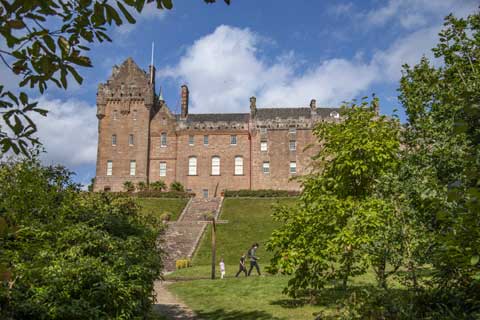
Just outside Brodick sits one of Arran's most famous landmarks: Brodick Castle. Set beneath the slopes of Goatfell and overlooking the bay, the castle was the ancient seat of the Dukes of Hamilton.
Inside, you'll find grand rooms filled with artwork, silver collections, and Victorian interiors.
The grounds contain Britain's only island country park, which offers woodland trails, colourful gardens, and family‑friendly spaces - plus some of the best views on the island.
Don't forget to seek out the famous woodland garden, which contains one of the finest collections of rhododendrons in Europe.
King's Cave
Hidden along Arran's rugged west coast, King's Cave is one of the island's most atmospheric historical sites. Reached via a scenic coastal walk through woodland and along shoreline paths, the cave is closely linked to the legend of Robert the Bruce, who is said to have sheltered here in hiding before reclaiming the Scottish crown.
According to legend, it was inside the cave that Bruce famously watched a spider repeatedly try to spin its web, which inspired his determination to continue fighting.
Goatfell
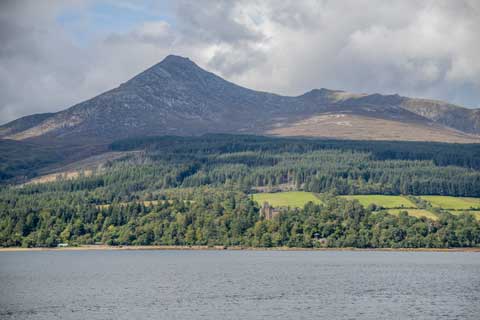
Goatfell is Arran's highest peak at 2866 ft (874 m) and dominates the island's northern skyline. The mountain is famous for its spectacular granite ridges.
The climb from Brodick is challenging but manageable for most reasonably fit walkers.
The route begins in woodland before opening onto a rugged mountainside, with views expanding as you ascend towards the summit.
On a clear day, you can see the mainland, the Mull of Kintyre, Islay, Jura, and sometimes even Northern Ireland.
Arran Heritage Museum
Located in Brodick beneath the shadow of Goatfell, Arran Heritage Museum offers a fascinating insight into traditional island life. The museum's collection includes historic cottages, farming equipment, old photographs, and everyday artefacts that tell the story of Arran's communities through the centuries.
Machrie Standing Stones
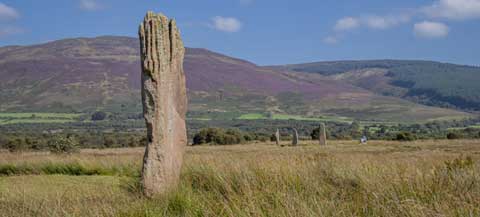
Located on Arran's west coast, the Machrie Moor Standing Stones are one of Scotland's most atmospheric prehistoric sites. These Bronze Age stone circles rise from open moorland, with some stones standing several metres tall.
The stones are thought to date from between 3500 and 1500 BC.
The short walk across the moor only adds to the sense of mystery. It's a must‑visit for anyone interested in Scotland's prehistoric past.
Glenashdale Falls
Tucked away in woodland near Whiting Bay, Glenashdale Falls is one of Arran's most scenic natural attractions. A peaceful forest trail leads visitors through mature woodland to a viewing platform overlooking the impressive twin waterfalls as they cascade 140 ft (45 m) through a steep rocky gorge.
Lochranza Castle
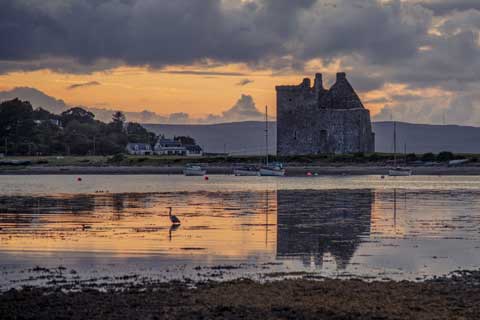
Set against the scenic backdrop of northern Arran, Lochranza Castle is one of the island's most picturesque historic landmarks.
The ruined tower house sits on the edge of Loch Ranza, surrounded by mountains and often reflected in the calm water below.
The castle was originally constructed in the 1200s for the MacSweens, a powerful family during the era of the Norse raids. The castle was later rebuilt as a tower house in the 16th century.
The castle was once associated with the powerful Hamilton family and is believed to have hosted visits from King James V.
Scenic Walks
For walkers, Arran offers some of the finest scenery in the Scottish islands, with routes ranging from peaceful glens to dramatic coastal trails.
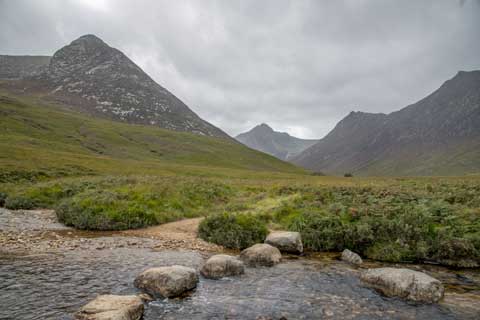
Glen Rosa is one of the island's best-loved walks, leading from Brodick into a spectacular valley of dramatic mountains and open moorland. The glen contains several rock pools, including the Blue Pool, a popular place for wild swimming.
Nearby, Glen Sannox offers a wilder, more remote experience, with stepping stones, rocky ridges and dramatic scenery. At the head of the glen sits "The Saddle", a high mountain pass to Glen Rosa.
Meanwhile, the Cock of Arran coastal walk at the island's northern tip offers a gentler but equally rewarding route, passing beneath steep cliffs with sweeping sea views towards Kintyre and the west coast of Scotland.
Exploring the Isle of Arran with Scottish Tours
Arran is just one of Scotland's islands that you can visit on a Scottish Tours holiday. Expertly planned with comfortable accommodation, you'll travel in style and enjoy the company of a professional guide who'll bring its history, nature and traditions to life.
Browse our Scotland Tours and book today.
Photo credits: Visit Glasgow / Paul Watt Photography and Shutterstock
| TOUR TIP: Arran, Scotland in Miniature 5 days/4 nights from Edinburgh and Glasgow |