SYMBOLS OF SCOTLAND
The Saltire
This flag is part of Scotland's special identity. The Scottish flag or `saltire' is derived from the cross of St Andrew, Scotland's patron saint. Its adoption is said to date from a battle, some say in 756 between a combined force of Picts and Scots against invading Northumbrians under their leader Athelstane. King Angus I of Scots prayed to St Andrew and when battle was joined a vision of the cross of St Andrew was seen, white against a blue sky. This helped the Scots to victory. You will see the flag flying in plenty of locations throughout the country, as Scotland's own symbol, notably at Athelstaneford, near Haddington, East Lothian, site of the ancient battle.
The cross is also part of the Union Jack, symbol of the United Kingdom.
The Lion Rampant flag was chosen by William I of Scotland for his standard. It shows the red lion standing on its hind legs surrounded by a border of fleurs-de-lis.
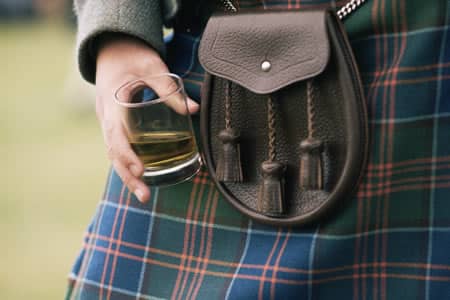
TartanThe distinctive checked cloth of the Highlands has now come to represent all of Scotland.
The ThistleThis is another reminder of Scotland. Its role as a Scottish emblem relates to an incident in an early battle against Scandinavian invaders. The Scots, it is said, were alerted to a raiding party advancing under cover of darkness when one of the barefoot raiders yelled in pain after stepping on a Thistle!
The Scottish Crown JewelsThe Scottish Crown Jewels, known as the Honours of Scotland, are the oldest regalia in the British Isles. They comprise a crown, a sword and a sceptre, all of which date from the 15th and 16th centuries. Together with the Stone of Destiny, these symbols of Scottish nationhood are on permanent public display at Edinburgh Castle.